Table of Contents
Pull a well-worn pair of jeans out of the drawer and look at the back of the knees. Those pale horizontal bands, stacked like a barcode, are honeycombs. They are also why the rest of the leg looks uneven by comparison: denim does not fade uniformly, because it does not wear uniformly. Color leaves where the fabric bends, rubs, and gets agitated, and it stays where the fabric sits still.
That is not a defect. Indigo behaves this way by design, and some of the pattern is the point. But there is a difference between fading that looks earned and fading that looks like a laundry accident, with blotchy thighs, one white knee, and a washed-out waistband above a still-dark hem. Here is what causes each pattern and which habits decide how fast it happens.
Why Indigo Fades at All
Indigo is not a penetrating dye. It sits on the surface of the cotton fiber in crystalline layers, attached weakly enough that friction can knock it loose. On rope-dyed denim, the yarn is dipped repeatedly so the core stays white while the outside goes blue. Every abrasion exposes a little more of that white core.
That structure explains why a new pair looks flat and slightly stiff, and why months of wear turn it into something with depth. Ring-spun yarn, with its irregular diameter, takes dye unevenly along its length, so it abrades into highs and lows rather than one flat shade. Open-end yarn is smoother and fades toward a flatter grey.
Crocking Is Not Fading
Two different things get called fading. Crocking is dye transferring onto your hands, your bag strap, or a pale sofa. It happens most in the first weeks on dark, unwashed denim, and it stops. Abrasion fade is the gradual loss of surface dye where the fabric rubs, and it does not stop.
Why Dark Denim Fades Differently
A deep indigo has more dye layers to lose before it reads as light, so it holds contrast longer. A mid or light wash starts with less indigo on the surface, so the same abrasion moves it much further. If you want a pair that still looks sharp in a year, start darker. Our roundup of dark wash jeans for evenings out covers the shades that keep their depth.
Where the Uneven Fading Comes From
Every fade on a pair of jeans maps to a mechanical cause. Learn to read the map and you can predict where your next pair will go first.
Whiskers: The Lap Creases
The diagonal lines radiating from the crotch across the front of the thigh are whiskers. They form because the fabric folds into the same sharp creases every time you sit, and the apex of each fold takes the most abrasion. Men who sit for long stretches get deeper whiskers than men who stand. Rise matters too: a jean that sits below your natural waist has less fabric to fold cleanly, so it creases harder. Our notes on high-rise jeans explain how raising the waist changes the whole crease pattern.
Honeycombs: The Back of the Knee
Honeycombs are the horizontal bands behind the knee, and they usually form faster than any other fade. The back of the knee folds to nearly 180 degrees dozens of times an hour, and the fold line compresses against itself. Stiff denim makes sharp, narrow honeycombs; softer washed denim makes broad, soft ones. Skinny and slim cuts concentrate the fold into a tight band, which is why they go white there first.
Patchy Knees and Thighs
Blotches are rarely from walking. A phone in the front pocket, a wallet in the back, keys, a bag strap on one shoulder, or the edge of a desk against your thigh all create localized abrasion that reads as a patch rather than a line. Crossing your legs the same way every day does the rest.
Hems, Waistbands, and Pocket Edges
The hem abrades against shoes and floors, the waistband against belts and chair backs, and pocket edges against whatever you push into them. These zones go first on a pair that is washed often but worn gently, which is why jeans can look tired at the edges while the legs still look new.
The Habits That Speed Up Fading
Washing is the biggest lever you control, and most of the damage happens in ways that are easy to avoid.
- Hot water. Heat swells the cotton fiber and loosens the indigo bond. Warm is gentler and cold is gentlest.
- Long agitation. Every minute in the drum is thousands of small abrasions applied to the whole garment, which strips indigo from areas that were still dark and flattens the contrast you wanted.
- Detergent with optical brighteners. They are formulated to make white look whiter, and they lift blue the same way. A dye-free, pH-neutral wash is kinder.
- The dryer. Tumble drying is heat plus abrasion plus a metal drum, the fastest route from crisp indigo to soft grey.
- Direct sun. UV breaks down indigo, so a pair left on a line all afternoon fades faster than one dried in shade.
- Ironing on a crease. Heat and pressure set a sharp fold, and a sharp fold abrades harder the next time you sit.
None of these ruins a pair in one wash. The effect is cumulative: jeans washed hot and tumble dried weekly lose their depth in a season, while the same pair washed cold and hung to dry can hold it for years.
How to Slow the Fade Without Babying Your Jeans
Wash Less, Spot Clean More
Aim for a wash every 8 to 12 wears on dark denim, and every 4 to 6 on light denim or anything worn against skin in summer. Between washes, spot clean with a damp cloth and a drop of mild soap, then hang the jeans where air can move around them. Denim does not need to be laundered to be clean. It needs to dry.
The water saved is real. One machine wash uses many times the water of a spot clean, and stretching the interval is the simplest reduction most wardrobes can make. If that angle matters, our guide to organic cotton jeans covers the fiber side of the same equation.
Cold Water, Inside Out, Short Cycle
Turn the jeans inside out so the outer face takes less direct agitation, close the button and zip, and run a cold, short cycle with a low spin. Use about half the detergent you would on a normal load. A front loader is gentler than a top loader with an agitator, but the settings matter more than the machine.
Skip the Dryer
Hang them by the waistband from a clip hanger, or drape them over a rail in a room with moving air, out of direct sun. They will be dry in four to eight hours depending on weight and humidity. If you must use a dryer, choose the lowest heat and pull them out while slightly damp.
Rotate Your Pairs
Wearing the same pair five days running concentrates abrasion on identical crease lines and never lets the cotton recover its shape. Two pairs in rotation outlast a single pair worn daily, and the fade develops more evenly because the two crease differently.
Our Top Picks
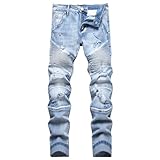
If you would rather start with denim that fades slowly than fight the process, compare these three on fabric weight, yarn type, and how much the wash has already been broken in.
Affiliate note: the product links below are Amazon affiliate links. As an Amazon Associate, Gent Garb earns from qualifying purchases at no extra cost to you.


Wash and Dry Methods Compared
The trade-offs are consistent even when the method is not.
| Method | Effect on color | Best for | Watch out for |
|---|---|---|---|
| Cold wash, inside out, short cycle | Slow, even loss; keeps contrast | Dark and raw denim | Under-washing if worn daily in heat |
| Hand wash in a tub | Gentlest option without a machine | Raw denim and first washes | Rinsing thoroughly takes patience |
| Warm machine wash, normal cycle | Noticeable lift per wash | Heavily soiled work jeans | Flattens whiskers fast |
| Tumble dry, low heat | Softens fabric, accelerates fade | Stiff new denim you want broken in | Shrinkage in unsanforized cotton |
| Line dry in shade | Almost no color loss | Every pair you care about | Stiffness if hung soaking wet |
| Line dry in direct sun | UV bleaching, often one-sided | Whites and very light washes | Two-tone legs you cannot undo |
| Freezer overnight | None; it does not sanitize fabric | Nothing, honestly | False confidence between washes |
The freezer trick survives because it sounds plausible. Cold slows bacterial growth in food, but a domestic freezer does not get cold enough to sanitize fabric or remove the oils that hold odor. Air and a wash do.
Matching the Method to the Denim
Fabric composition changes the rules more than most care labels admit.
Stretch Denim
Anything with elastane recovers its shape through heat, which argues for warm water and against high dryer heat, since heat degrades the fiber. Stretch denim also abrades faster at the knee because it flexes sharply and springs back, so the same fold line gets worked repeatedly. Our guide to stretch jeans for weekends covers how much elastane is worth having before recovery becomes the limit.
Raw and Selvedge Denim
Raw denim is unwashed, so it is stiff, crocks heavily, and shrinks on the first wash. Wash it cold and inside out, and accept that the first wash will move the color more than any wash after it. High-contrast fades come from wearing raw denim hard between infrequent washes, not from washing it aggressively.
Common Mistakes
- Washing after every wear. It is the fastest way to erase contrast, and denim does not need it. Air and spot clean instead.
- Using the dryer to set the fit. Heat shrinks cotton and degrades elastane, and it costs you a season of color.
- Spot bleaching a stain. Bleach leaves a white patch that no amount of wear will blend in. Use a color-safe treatment.
- Washing zipped and right side out. The outer face takes all the agitation, and the zip abrades the fabric around it.
- Trusting the freezer. It does not deodorize, and it delays the wash that would actually fix the problem.
Frequently Asked Questions
Why do my jeans fade more on one leg?
Almost always because of something you carry or how you sit. A phone in the same pocket, a bag strap on one shoulder, or crossing the same leg every day puts abrasion on one side only.
How often should I wash jeans to keep the color?
Every 8 to 12 wears for dark denim, and every 4 to 6 for light or stretch denim worn in warm weather. Wash sooner if they smell or are visibly soiled, since oil does more long-term damage than one extra cold wash.
Does cold water really prevent fading?
It slows it rather than prevents it. Cold water reduces fiber swelling and dye loss per cycle, and it is the easiest change you can make. Cycle length and dryer heat matter just as much.
Can I restore faded jeans?
You can even out a patchy fade with a cold dye bath, but you cannot recover the depth of rope-dyed indigo. Re-dyeing usually looks flatter than the factory finish, so treat it as a way to extend wear.
Are honeycombs and whiskers bad?
No. They are the natural result of wearing denim and part of why the fabric develops character. They only become a problem when they are extreme or uneven from leg to leg.