Table of Contents
Five days of clothing in one carry-on is not a packing trick, it is arithmetic. A 40-liter bag holds 40 liters, and a normal five-day load of jeans, shirts, a spare layer and two pairs of shoes runs to roughly 55 liters before you add a laptop or a dopp kit. That gap is why so many four-night trips end with a bag checked at the gate.
The way out is a capsule: a small set of pieces where every top works with every bottom, fabrics that shed wrinkles instead of holding them, and a method that compresses soft goods rather than stacking them flat. Get those three right and five days fits with room left for a jacket.
The Capsule Math: What Five Days Actually Requires
Most overpacking starts with counting days instead of outfits. Five days does not mean five shirts and five pairs of trousers, but three or four outfits that rotate, plus enough socks and underwear to reach a laundry point on day four.
The 4-3-2 Count
Four tops, three bottoms, two pairs of shoes, one outer layer. That produces twelve distinct outfits, far more than a five-day trip can use, and it occupies roughly 28 to 32 liters when packed well. Wear each bottom twice, each top once, and plan one sink wash at the midpoint.
Nobody remembers a repeated pair of trousers. They notice a wrinkled collar, which is a fabric problem rather than a quantity problem.
One Color Family, Two Neutrals
Pick two neutrals and one accent: navy and stone, charcoal and olive, black and grey. When every top matches every bottom, four tops and three bottoms give you twelve combinations. Add a printed shirt and the same count collapses to six or seven outfits. Keep the accent small, such as a belt or a knit cap.
What Stays Home
- A second jacket. Two jackets eat 8 to 10 liters; one covers rain, wind and a cold restaurant.
- Bulky sweatshirts. A 400 gsm fleece takes the space of three shirts and dries slowly.
- Any shoe past the second pair. Shoes are rigid and cannot be compressed.
- Full-size toiletries. Decant into 50 to 100 ml bottles; a full shampoo can weigh 400 g.
- The just-in-case formal outfit. A collared shirt and dark trousers handle almost anything.
Fabric Choices That Save Space
Fabric weight and weave decide both how much room a garment takes and whether it arrives wearable. Two shirts in the same size can differ by 40 percent in packed volume.
Merino Wool and Blends
Merino in the 150 to 190 gsm range is the most efficient travel fabric for tops. At around 17.5 microns it sits soft against skin, resists odor well enough to wear twice between washes, and dries in four to six hours on a hanger. Blends with 15 to 20 percent nylon harden the collar and cuffs, the first places a lightweight wool shirt fails. A 200 gsm merino polo packs like a T-shirt but holds a collar shape jersey never will.
Technical Synthetics and Blends
Polyester and nylon blends with 5 to 10 percent elastane pack to almost nothing, dry overnight and resist creasing. The trade-off is odor retention and shine, so choose matte, textured weaves over smooth filament fabrics. For trousers, a nylon-cotton blend at 180 to 220 gsm gives a chino look with half the drying time of cotton, which can remove the need for a second pair.
The Cotton and Linen Tax
Cotton jersey at 180 gsm is comfortable but holds water, dries slowly and creases at fold lines. Linen is worse for travel: it creases within 20 minutes of wear and takes the shape of whatever it pressed against in the bag. If you want linen on a summer trip, take one shirt and treat the crease as part of the look.
Packing Method: Bundle, Roll, Compress
A well-chosen capsule packed badly still fills the bag, and it arrives looking like it was slept in.
The Bundle Wrap
Lay the largest, most crease-prone item flat first, then layer everything else on top in a shrinking stack. Fold the outer garment's sleeves and hem over the pile last so the whole thing becomes one parcel. Wrinkles distribute around the curve of the bundle instead of concentrating at one fold line, which is why this beats folding for trousers and blazers.
Rolling vs. Folding
Roll knits, T-shirts, socks, underwear and anything made of jersey. Fold structured pieces along their existing seams: dress shirts, blazers, trousers with a pressed crease. Rolling a dress shirt into a 4-inch cylinder is the fastest way to put three permanent creases across the chest. A useful hybrid is to roll the soft goods into a core, then wrap the folded pieces around that core.
Cubes and Compression
Two cubes cover a five-day trip: one 10-liter for clothing, one 3-liter for cables. Cubes save little volume alone, but they stop the bag becoming a loose pile. Compression sacks save 30 to 40 percent of volume at a cost: they add 100 to 200 g and crease garments harder. Never compress wool, which loses loft.
Shoes: The Heaviest Decision
Shoes are the least compressible thing you own. Leather sneakers weigh 700 to 900 g a pair, trail runners 600 to 800 g, and boots can pass 1.2 kg while eating 8 liters of space.
The Two-Pair Rule
Wear one pair, pack one, and make the worn pair the bulkier of the two because anything on your feet is weight the airline does not count. A dark leather sneaker handles restaurants, cities and most offices; a packable runner or a suede loafer covers the second slot depending on whether the trip is active or social. With a formal event, the second pair becomes a dress shoe and the sneaker stays home.
Packing Shoes Without Soiling Clothes
Put each shoe in a cotton bag or shower cap with the sole facing the wall of the bag rather than the clothes. Stuff socks or a rolled belt inside to hold their shape and use dead space, then place them at the wheel end of a roller bag or against your back in a backpack.
Our Top Picks
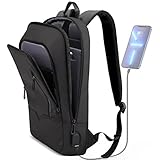
These three bags suit the capsule approach above: moderate capacity, real compression, and a flat-opening layout.
Affiliate note: the product links below are Amazon affiliate links. As an Amazon Associate, Gent Garb earns from qualifying purchases at no extra cost to you.


Carry-On Size and Weight Limits
Depth is the dimension that catches people. A bag that fits a mainline overhead can fail a commuter jet by 2 inches.
| Bag category | Typical dimensions | Usable capacity | What it means in practice |
|---|---|---|---|
| Mainline domestic overhead | 22 x 14 x 9 in (56 x 36 x 23 cm) | 38 to 45 L | Most rollaboards fit; weight limits are often unenforced |
| Regional jet overhead | 19 x 13 x 7 in (48 x 33 x 18 cm) | 28 to 35 L | Soft bags compress in; rigid cases get gate-checked |
| European low-cost cabin | 21.6 x 15.7 x 7.8 in (55 x 40 x 20 cm) | 35 to 40 L | Depth is the hard limit, and bags are often weighed at the gate |
| Long-haul economy | 21.6 x 15.7 x 9 in (55 x 40 x 23 cm) | 40 to 45 L | Typically paired with a personal item for your laptop |
| Underseat personal item | 18 x 14 x 8 in (45 x 35 x 20 cm) | 20 to 28 L | Enough for a laptop, a dopp kit and one change of clothes |
Measure the packed bag, not the empty one. Soft bags bulge by 1 to 2 inches once full, and that bulge is what fails the sizer.
Choosing the Bag for a Five-Day Trip
A 35 to 45 liter bag is the sweet spot. Below 30 liters you are doing laundry every second day; above 50 you are carrying weight you will not use. If you consistently overpack, a smaller bag fixes it faster than better folding, which is the logic behind these compact travel backpacks built to stop overpacking.
Clamshell vs. Top-Load
A clamshell opens flat like a suitcase and lets you see everything at once. A top-loader is lighter and more water resistant but turns into a duffel you unpack by feel. For a five-day city trip, clamshell wins; for transit-heavy travel, a top-loader with a side access zip carries better.
Straps and Weight Distribution
A hip belt should carry 60 to 70 percent of the load; if your shoulders ache after an hour, the belt is too low or the torso length is wrong. Load lifters should angle back at roughly 45 degrees, and the sternum strap belongs about 2 inches below your collarbone. Our guide to ergonomic backpacks that prevent shoulder strain goes deeper on fit.
Security and Weather
Look for a main compartment against your back, zips that clip together, and a hidden pocket for a passport. The anti-theft backpacks worth carrying in crowded stations are built around those three features. Rain matters too: ten minutes in steady rain wets through untreated nylon, and a wet bag doubles in weight. Carry a 60 g rain cover or choose a coated 420D face fabric, as covered in this look at waterproof backpacks for monsoon cities.
The First Night Routine
Unpack completely on arrival. Living out of a bag creases everything twice. Hang shirts and trousers in the bathroom while you shower: ten minutes of steam relaxes most travel creases, and gravity finishes the job overnight. Roll dirty clothes into a separate cube, and do the sink wash on day three with 30 ml of travel detergent.
Common Mistakes
- Packing for the itinerary you wish you had. A city trip does not need hiking boots, and a trek does not need a blazer.
- Rolling structured garments. Rolling a dress shirt creates hard fold lines that steam will not remove.
- Compressing everything. Overstuffed bags weigh more, crease harder and fail gate sizers first.
- Bringing a third pair of shoes. Rigid volume for a pair you will wear once.
- Choosing a rigid case for a soft trip. Hard shells protect a laptop, nothing else.
- Leaving laundry out of the plan. No wash point forces a bigger bag.
Frequently Asked Questions
Can five days really fit in a carry-on?
Yes, in a 35 to 45 liter bag, provided you pack three or four rotating outfits rather than five separate ones. The limiting factors are shoes and outerwear, not shirts.
How many outfits do I need for a five-day trip?
Four tops and three bottoms give you twelve combinations, more than enough for five days. Wear each bottom twice and wash once at the midpoint.
Should I roll or fold clothes for a carry-on?
Roll knits, T-shirts and socks, and fold dress shirts, trousers and blazers along their existing seams. Use the rolled items as a core and wrap the folded pieces around them.
How do I pack a suit without wrinkling it?
Turn the jacket inside out, fold it along the back seam, and lay it at the top of the bundle. Hang it in a steamy bathroom on arrival and leave it overnight.
What shoes should I bring for a five-day trip?
One dark leather sneaker worn on travel days and one packable second pair, either a runner for active trips or a loafer for social ones. A third pair costs more space than it returns.