Table of Contents
Most leather boots do not wear out. They get ruined in the first two weeks, when a stiff new pair is worn for a ten-hour shift, soaked in the rain, dried next to a radiator, and then blamed for the blisters. Full-grain leather is skin. It has to be persuaded into the shape of your foot, not forced.
The process takes longer than product pages admit and less time than the folklore suggests. Here is a seven-day schedule, the sock and lacing tricks that do most of the work, and the shortcuts that permanently ruin a pair.
Why New Leather Boots Are Stiff
Three things make a new boot unyielding, and only one of them is the leather.
What Break-In Actually Means
Leather is a dense weave of collagen fibers held together by oils. In a new boot those fibers sit in the shape of the last, not your foot. Walking flexes them thousands of times, and the warmth and moisture of your foot plasticizes them just enough to settle. The toe box creases where your gait bends, the heel counter softens around your heel bone, and the footbed compresses under the ball and arch.
That is the whole mechanism: repeated flexing, mild heat, and a little moisture. Push any of the three too hard and you damage the leather instead of training it.
How Long Break-In Actually Takes
Full-grain work boots with a stiff heel counter need 25 to 50 hours of walking to feel neutral. Soft tumbled leather can take 10; heavy oil-tanned leather on a Goodyear welt can take 60. Worn five days a week, that is two to three weeks.
Stiffness That Is Not Break-In
Some tightness never resolves. If the ball of your foot is pinched across the widest part, the boot is too narrow and walking will not add width. If your heel lifts more than a quarter inch per step, the volume is wrong even when the length is right. If the top digs into your instep, the last is too shallow. These are fit problems, not break-in problems, so run the checks in our guide to finding the perfect work boot fit before you invest the hours.
A Seven-Day Break-In Schedule
A schedule beats willpower. Short, frequent sessions flex the leather and let it rest; one long day leaves you limping and the boot soaked.
Days 1 and 2: Two-Hour Indoor Sessions
Put the boots on at the end of the day, when your feet are at their largest. Wear medium-weight wool socks, lace snug but not tight, and walk on carpet for 90 minutes to two hours. You should be able to slide one finger under the laces at the top two eyelets; if you cannot, back them off. A tight upper does not break in faster, it just presses in one place.
Days 3 and 4: Half Shifts
Move outside for four-hour stretches on pavement and stairs, which flex the sole far more than carpet does. This is where hot spots appear, usually on the heel and the outside of the little toe. Stop and cover one the moment it feels warm. A blister costs a week of progress.
Days 5 to 7: Full Days, Alternating
Wear them for a full shift, but not two days running. Leather needs about 24 hours to release a day's moisture, and boots worn back to back stay damp at the flex point, which is where cracks start. Two pairs on alternate days outlast one pair worn daily. If these will do daily outdoor work, our roundup of work boots for daily outdoor use covers what to look for in a second pair.
The 40-Hour Checkpoint
By 30 to 40 hours the boot should feel snug but no longer stiff, with one clean crease across the toe box rather than a fan of small ones. If it still bites at 50 hours, re-check the fit instead of wearing it in further.
Sock and Lacing Tactics That Do the Real Work
Most first-week pain comes from motion rather than pressure. Control the motion and the break-in speeds up.
Two-Sock Layering
A thin liner sock, merino or smooth synthetic at about 1 mm, under a cushioned wool sock is the oldest trick in the book. The two layers slide against each other instead of against your skin, which kills the shear that causes blisters. Swap socks at midday in week one, since a damp sock softens the skin, and skip cotton entirely. Sock thickness also changes interior volume by roughly half a size, which is why boots in our guide to insulated work boots for cold climates are sized around a winter sock.
Lacing for Pressure Control
Two-zone lacing separates the lower from the upper with a surgeon's knot at the third eyelet from the top, so you can lock the midfoot and leave the ankle looser. If the top presses on your instep, skip the highest eyelet. If your heel lifts, add a heel lock: run the lace back down into the same-side eyelet before tying. Flat laces spread pressure better than round ones, and on a tall boot the lacing has to hold the ankle without cutting circulation, which is the balance covered in our guide to high-cut work boots and ankle support.
Targeted Padding
Moleskin on a hot spot buys days; cut it slightly larger than the sore area and round the corners so it does not peel. An adhesive felt pad under the tongue fixes instep pressure. If a seam inside the heel counter grinds, a strip of smooth tape changes how the boot releases your heel. All three are temporary, which is what you need while the leather is still moving.
Conditioning Without Over-Softening
Conditioner is not a shortcut. It replaces oils the leather loses and keeps fibers supple enough to flex without cracking. Used heavily, it turns a structured boot floppy and the leather never stiffens back.
How Much and How Often
A dime-sized amount per boot covers a full pass. Warm it between your fingers, work it into the flex point and dry panels, let it sit 20 minutes, then buff off the excess. Two thin coats beat one heavy application. New boots usually need one light conditioning in week one.
Heat and Water Are the Real Damage
Leather shrinks and stiffens permanently around 140 to 160 degrees Fahrenheit. A hair dryer on high, a radiator, an oven on low, or a car shelf in summer all push it past that. Warm is useful, hot is destructive. Soaking is the other shortcut that backfires: water swells the fibers, and as the boot dries they pull apart at the flex point, leaving cracks that never close. If they get soaked, stuff them with newspaper, dry them away from heat, and wait 24 hours.
Stretching Safely
A stretcher works on width and instep, not length, and only where pressure sits. Leave it 24 to 48 hours at a time and never push past half a size, or the upper distorts and the welt line pulls. Cedar shoe trees are the better habit: put them in while the boot is warm from your foot and they hold the shape as it cools.
Our Top Picks
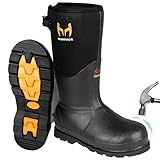
If you are starting from scratch, compare these three on shaft height, leather temper, and insulation before committing to a schedule. Each is built to take conditioner and flex without losing its shape.
Affiliate note: the product links below are Amazon affiliate links. As an Amazon Associate, Gent Garb earns from qualifying purchases at no extra cost to you.


Break-In Methods Compared
Not every method deserves a place in your routine.
| Method | What it does | Time to comfort | Risk if overdone |
|---|---|---|---|
| Two-hour wear sessions | Flexes the upper, starts the footbed imprint | 5 to 10 days | Blisters if hot spots are ignored |
| Two-sock layering | Reduces shear against the skin | Immediate, faster progress | Damp, overheated feet in warm weather |
| Light conditioning | Keeps fibers supple so they flex, not crack | 2 to 4 days | Limp upper, stretched flex point |
| Cedar shoe trees | Holds shape, pulls moisture between wears | Overnight | None, if the tree fits |
| Shoe stretcher | Adds width and instep room at one spot | 24 to 48 hours | Distorted upper past half a size |
| Soaking in water | Softens leather fast, then reverses | Looks quick, then stalls | Cracks, collapsed heel counter |
When a Boot Will Not Break In
Some pairs never soften because they are the wrong shape for the foot wearing them.
Wrong Width, Not Wrong Length
If pressure sits across the ball of your foot and your toes still have a thumb's width in front of them, length is not the problem. Going up a width beats going up a length, which leaves a boot that creases behind the toe cap and lets your heel slide.
The Wrong Last for Your Arch
A high instep in a shallow boot presses the tongue no matter how much you condition it, and no schedule will fix a last that is fighting your foot.
Structural Faults
Press the heel counter with a thumb. If it folds inward, it will not hold your heel. A steel toe cap low enough to touch your toes, or a shank that flexes mid-sole instead of at the ball, is a design mismatch. Return those.
Common Break-In Mistakes
Six habits cause most of the damage.
- Wearing them for a full shift on day one. Ten hours of heat and sweat soften the upper unevenly, and the crease forms wherever your foot pressed first.
- Buying them tight because leather stretches. Leather gives a few millimeters across the width at most, not a full size.
- Baking, blow-drying, or soaking them. All three push the leather past the point where it can recover.
- Over-conditioning in week one. Heavy coats break down the structure that supports your ankle.
- Wearing the same pair every day. Boots that never dry out crack at the flex point months earlier than rotated pairs.
- Ignoring a hot spot. Two minutes with moleskin saves a week of walking on the side of your foot.
Frequently Asked Questions
How long does it take to break in leather boots?
Most full-grain boots need 25 to 50 hours of walking to feel neutral, roughly two or three weeks of regular wear. Softer leather can take 10 hours, heavy oil-tanned boots 60. Hours of wear matter more than calendar days.
Can I speed up break-in without damaging the leather?
Yes, with short frequent sessions, two layers of socks, and lacing you adjust as you go. The gains come from more flex cycles per day, not more heat. Anything hotter than warm to the touch trades a long life for a fast week.
Should I buy leather boots a half size bigger to allow for break-in?
No. Buy the size that fits with the socks you will actually wear, leaving a thumb's width in front of your longest toe. Sizing up produces heel slip and a crease that forms too far back on the toe box.
Will leather boots stretch in width?
A few millimeters at the widest point after a few weeks, or about an eighth of an inch at one spot with a stretcher on conditioned leather. That fixes a snug fit, not a full width too narrow.
Is it normal for new boots to hurt?
Mild pressure at the flex point and around the heel is normal for the first week and should fade as the leather softens. Sharp pain, numbness, or a pinch across the ball of the foot means the wrong size or last.