Table of Contents
Most men who ask how many watches they need already own four or five. They sit in a drawer, each bought for a different reason, and only one or two ever make it onto a wrist. The problem is rarely quantity. It is that the collection got assembled one impulse at a time instead of by deciding what a watch actually has to do.
A workable collection is built from roles. Work out which jobs you genuinely ask a watch to do in a normal week, buy one piece per job, then stop. For most men that number lands at three, and three is not a compromise. It is roughly the size at which every watch gets worn often enough to justify what it costs to keep running.
The Three Roles a Watch Has to Fill
Strip away the marketing and a wristwatch does one of three jobs. It goes to work, it goes out on weekends, or it goes into water and dirt. Dress watches, chronographs and field watches are all variations on those roles, and most of the variation can be covered by choosing well inside a role instead of adding a fourth case to the drawer.
The test takes one question. What did you actually do last Saturday? A trail, a pool or a bike means you have an outdoor role to fill. A restaurant and a jacket means you do not.
Role One: The Quiet Daily Watch
This is the watch you wear five days a week, and its requirements are narrow. It should slide under a shirt cuff without catching, read clearly at a glance, and look unremarkable enough that nobody comments on it twice. That points to a case between 36 and 40 mm, a thickness under about 11 mm, and applied rather than printed markers so it stays legible in flat office light.
A leather strap and a fine-link bracelet both work, but pick the one you will maintain. Leather wants conditioning every three to four months and replacement every 18 to 24 months with daily wear. A steel bracelet outlasts it several times over and shows hairline scratches within weeks, which some men find characterful and others find maddening.
Role Two: The Weekend Watch
The weekend watch absorbs the abuse the daily watch should not. Hiking, gardening, moving furniture, a bike ride with the kids. Look for 100 m water resistance, a crystal that sits slightly proud so the case edge takes knocks instead of the glass, and enough case mass that an impact does not transfer straight into the movement.
This is where a fabric or rubber strap earns its place. A single-pass nylon strap dries in under an hour, costs little to replace, and puts a layer of webbing between the caseback and your wrist. If you work with your hands for a living, our breakdown of shock-resistant watches for industrial jobs covers case construction, crown guards and movement protection.
Insist on a screw-down crown. The weekend watch is the one most likely to be left in a bag, and a push-pull crown knocked sideways is the most common way a watch takes on water.
Role Three: The Training Watch
The third slot only exists if you train, swim or spend weekends in salt water. A dedicated training watch is light enough not to bounce on a run, survives chlorine without corroding its gaskets, and gives you a stopwatch you can operate by feel rather than by sight.
If you do not swim, dive or run to a schedule, skip this slot. Two watches are a complete collection for a man who never gets wet. Do not buy a third because a framework says three. A watch worn four times a year is a storage problem, not a wardrobe.
The Specs That Decide Whether a Watch Works
Case diameter gets all the attention and matters less than two other numbers. Learn these and you can judge a watch from a spec sheet without strapping it on.
Lug-to-Lug Is the Real Fit Measurement
The distance from the tip of one lug to the tip of the other decides whether a watch overhangs your wrist. As a rule it should stay at or under the flat width across the top of your wrist. A 42 mm case with a short 46 mm lug-to-lug wears smaller than a 40 mm case with long 50 mm lugs, which is why two watches of the same diameter can feel completely different.
Straight lugs that run horizontally make a watch wear large; curved lugs that drop toward the wrist make it wear small. If you are between sizes, take the shorter lug-to-lug every time. A slightly small watch looks intentional, an overhanging one looks borrowed.
Case Thickness and Cuff Clearance
Anything over roughly 13 mm will snag on a cuff and sit proud under a jacket sleeve. A dress shirt cuff leaves 10 to 14 mm of internal clearance depending on the placket, so a 12 mm watch with a flat caseback slides under cleanly while a 14 mm watch with a domed crystal does not. Caseback shape is half the equation: a recessed back can make a 13 mm watch feel like an 11 mm one.
Lug Width Limits Your Strap Options
Lug width is the gap between the lugs, usually 18, 20 or 22 mm. Twenty is the most common and gives the widest choice of replacement straps. An odd width like 19 or 21 mm narrows your options sharply, and quick-release bars only partly help because the strap still has to be the right size.
| Wrist circumference | Case diameter | Lug-to-lug ceiling | Typical lug width |
|---|---|---|---|
| 5.5-6.0 in (140-152 mm) | 34-36 mm | 44 mm | 16-18 mm |
| 6.0-6.5 in (152-165 mm) | 36-38 mm | 46 mm | 18-20 mm |
| 6.5-7.0 in (165-178 mm) | 38-40 mm | 48 mm | 20 mm |
| 7.0-7.5 in (178-190 mm) | 40-42 mm | 50 mm | 20-22 mm |
| 7.5 in and up (190 mm+) | 42-44 mm | 52 mm | 22 mm |
Measure your wrist with a strip of paper rather than guessing. Wrap it just above the wrist bone, snug but not tight, mark the overlap and measure. The result is usually 3 to 5 mm smaller than the bracelet size you have been buying.
Movements, Accuracy, and Service
The movement decides how much attention a watch demands. Mechanical movements need winding, setting and periodic servicing; quartz movements need a battery every few years and almost nothing else.
Mechanical Accuracy in Real Numbers
A modern automatic typically runs between minus 10 and plus 15 seconds a day, with well-regulated examples holding minus 5 to plus 10. Certified chronometer standard is minus 4 to plus 6. Beat rate matters too: 28,800 vibrations per hour, or 4 Hz, gives a smoother sweep and better stability than the 21,600 vph common in older and budget movements.
Power Reserve and the Weekend Problem
Most automatics carry 38 to 80 hours of reserve. Anything under 42 hours will stop between Friday evening and Monday morning, which means resetting the date every week. With three watches in rotation, a 70-hour reserve is the difference between a rotation and a chore.
Quartz Batteries and Service Intervals
A standard quartz movement holds plus or minus 15 seconds a month; a thermocompensated one holds about 10 seconds a year. Battery life runs two to three years, stretching to eight or ten with solar assistance. Mechanical watches want a service every five to seven years, or sooner if amplitude drops below about 200 degrees. That service is the hidden cost of ownership and the strongest argument for three watches rather than eight. Our roundup of sports watches with long battery life is worth reading if you would rather not think about servicing at all.
Our Top Picks
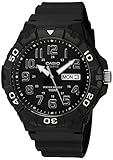
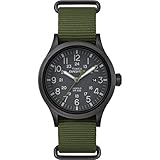
If you would rather compare a shortlist than read spec sheets all afternoon, the three watches below cover the daily, weekend and training roles and are worth weighing on case size and water resistance.
Affiliate note: the product links below are Amazon affiliate links. As an Amazon Associate, Gent Garb earns from qualifying purchases at no extra cost to you.

Water Resistance Ratings Decoded
Water resistance figures are static pressure ratings, not depth ratings. A watch marked 30 m has been tested against the pressure found at 30 m in still water, which is nothing like the pressure of a wave breaking over your arm. That is why a 30 m watch survives rain and fails in a pool.
| Rating | What it survives | Good for | Not for |
|---|---|---|---|
| 30 m / 3 ATM | Splashes, rain, handwashing | Desk work, commuting | Showering, swimming |
| 50 m / 5 ATM | Brief immersion, cold rinse | Light swimming in calm water | Diving, watersports |
| 100 m / 10 ATM | Surface swimming | Pool laps, snorkeling at the surface | Scuba, high-speed impact |
| 200 m / 20 ATM | Recreational diving pressure | Diving, open water swimming | Saturation diving |
| ISO 6425 diver | Tested to 125 percent of rated depth | Dive use with a timing bezel | Anything with the crown open |
Two habits protect any rating. Check the crown before every water contact, because one unscrewed crown turns a 200 m watch into a leaking one. Then keep it out of hot water: gaskets soften above about 40 degrees Celsius, so hot tubs age seals faster than salt water will. Our guide to waterproof sports watches for swimmers covers which ratings hold up to daily pool use.
When a Fourth Watch Makes Sense
There is one legitimate reason to go past three: a formal dress watch worn fewer than ten times a year. Black tie, a wedding where you are in the party, a serious board meeting. Thin case under 8 mm, no date, plain leather strap. It is a costume piece in the best sense and does not need to be expensive, because it does not need to survive anything. A new colourway of something you already own does not count.
Common Mistakes
- Buying for occasions you do not attend. A dive watch is a poor everyday watch if you never dive. The bezel catches on cuffs and the case is heavier than the job requires.
- Shopping by case diameter alone. Lug-to-lug and thickness decide how a watch wears. Two 40 mm watches can feel 4 mm apart.
- Treating 30 m as a depth rating. It is a splash rating. Swim in it and you will eventually find water under the crystal.
- Wearing one watch for the gym and the office. Sweat and chlorine attack leather and degrade gaskets faster than anything else in normal wear.
- Letting automatics sit stopped for months. Lubricants migrate and thicken when a movement never runs. Give each watch a wind and a day of wear every few weeks.
- Ignoring the service until the watch fails. Metal-on-metal wear inside a movement costs far more to correct than a routine service done on schedule.
Frequently Asked Questions
Is three watches too many?
No, three is about the practical upper limit for watches you actually wear. It covers office, weekend and training without any single piece sitting in a drawer for months.
Can one watch cover everything?
Yes, if you choose carefully. A 38 to 40 mm steel watch with 100 m water resistance and a bracelet handles a shirt cuff, a weekend hike and a swim, and swapping to a nylon strap changes its character enough for casual wear.
How often does a mechanical watch need servicing?
Every five to seven years under normal wear. Move sooner if the watch starts losing or gaining more than 15 seconds a day, or if the seconds hand stutters instead of sweeping.
Does a more expensive watch last longer?
Not automatically. Case finishing and bracelet quality track price fairly reliably, but a well-built mid-range watch serviced on schedule will outlast a neglected expensive one by decades.
How should I store watches I am not wearing?
Flat, dry and out of direct sun, with the crown screwed down and the strap not folded tightly. Leave leather unbuckled, because a strap stored under tension takes a permanent set at the hole.