Table of Contents
The starting line of a 100-mile race at 4 AM doesn’t care about your training miles or your carb-loading strategy—it cares about whether your gear can survive when your body is begging to quit. In 2026, the running watch on your wrist isn’t just a fitness tracker; it’s your navigator, coach, emergency beacon, and sometimes, your last line of defense against the wilderness itself. Ultra running has evolved from a fringe sport to a sophisticated pursuit where technology can mean the difference between a PR and a DNF, between finding your way home and triggering a search-and-rescue.
But here’s the reality: most “running watch” advice online is written by people whose longest run is a weekend 10K. They don’t understand that when you’re 18 hours into a mountain 100-miler, a dead battery isn’t an inconvenience—it’s a safety hazard. They haven’t experienced GPS drift turning a 50-mile race into 56 miles on their watch, or touchscreen failure when their fingers are frozen at altitude. This guide cuts through the marketing fluff to deliver what ultra runners actually need to know about 2026’s watch landscape, focusing on the features that matter when you’re pushing the limits of human endurance.
Top 10 Running Watches For Men
Detailed Product Reviews
1. Garmin Forerunner 55, GPS Running Watch with Daily Suggested Workouts, Up to 2 Weeks of Battery Life, Black - 010-02562-00

Overview: The Forerunner 55 is Garmin’s entry-level GPS running watch designed for runners who want essential training data without complexity. It tracks distance, pace, heart rate, and location while offering intelligent workout suggestions. With a lightweight 37g design and straightforward interface, it’s ideal for beginners and intermediate runners seeking reliable performance metrics.
What Makes It Stand Out: The PacePro feature provides GPS-based pace guidance for courses, while race time predictions help strategize efforts. Its two-week smartwatch battery life is exceptional, and the 20-hour GPS endurance covers ultra-distance events. The watch includes profiles for swimming, cycling, Pilates, and breathwork, making it surprisingly versatile beyond running.
Value for Money: At its price point, the Forerunner 55 delivers serious training tools typically found in more expensive models. While it lacks advanced metrics like VO2 max or training load, it provides everything most runners need. It outperforms smartphone apps and basic fitness trackers, representing excellent value for dedicated athletes.
Strengths and Weaknesses: Strengths include outstanding battery life, accurate GPS tracking, lightweight comfort, and Garmin’s reliable ecosystem. The simple button navigation works well in all conditions. Weaknesses are the basic monochrome display, absence of advanced performance metrics, and limited smartwatch features compared to the 165 or Venu series.
Bottom Line: The Forerunner 55 is a no-nonsense training partner for runners who prioritize function over flash. If you need dependable GPS tracking, solid battery life, and helpful training guidance without paying for unnecessary features, this watch delivers exceptional performance. Perfect for half-marathoners and marathoners on a budget.
2. TRAUSI Smart Watch for Men, 120 Sports Modes Smartwatch with 1.83" HD Touchsreen, IP67 Waterproof, Sleep Monitor, Bluetooth Call & Music Control Fitness Watch for Android/iPhone (Black)

Overview: This budget-friendly smartwatch packs an impressive feature set into an affordable package. With a large 1.83-inch HD display and 120 sport modes, it targets users wanting maximum functionality without premium cost. The TRAUSI TG08 offers Bluetooth calling, music control, and comprehensive health tracking for both Android and iOS users.
What Makes It Stand Out: The extensive 120 sports modes surpass many premium competitors, while Bluetooth call functionality is rare at this price point. Customizable watch faces allow personal expression, and the IP67 rating handles daily sweat and splashes. The 30-day standby time is remarkable, though real-world active use is 5-7 days.
Value for Money: This watch dramatically undercuts major brands while offering features found in devices costing 3-4 times more. For casual users, it provides exceptional bang-for-buck. However, sensor accuracy and build quality likely won’t match Garmin or Apple standards, making it a trade-off between features and precision.
Strengths and Weaknesses: Strengths include the vibrant large display, extensive sport tracking options, call functionality, and incredible standby battery life. Weaknesses involve unknown brand reliability, potentially less accurate heart rate and GPS data, IP67’s limited water protection (no swimming), and optimistic battery claims under heavy use.
Bottom Line: The TRAUSI TG08 is ideal for budget-conscious users wanting a feature-rich smartwatch experience. If you’re a casual fitness enthusiast who values connectivity and variety over absolute accuracy, it’s a compelling choice. Serious athletes should invest in more reliable brands, but for everyday wellness tracking, it’s hard to beat the price.
3. Timex Men’s Ironman Triathlon Classic 30 38mm Watch – Gray Case with Black Resin Strap
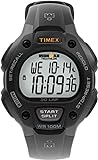
Overview: The Ironman Classic 30 is a legendary digital sports watch that has remained virtually unchanged for decades. This 38mm resin timepiece focuses purely on essential timing functions without smart features or sensors. It’s built for athletes who need reliable stopwatch functionality, durability, and incredible battery life without distractions.
What Makes It Stand Out: The 100-hour chronograph with 30-lap memory and 24-hour countdown timer are professional-grade features. Timex’s INDIGLO backlight provides superior low-light visibility. The three time zones and three customizable alarms add practical utility. Its simplicity is its superpower—no charging, no syncing, just dependable performance.
Value for Money: This is among the most affordable true sports watches available. For under $50, you get bulletproof reliability that outlasts smartwatches by years. It represents unmatched value if you only need timing functions, though it can’t compete with modern trackers for health data.
Strengths and Weaknesses: Strengths include extreme durability, water resistance suitable for swimming, intuitive button operation, year-long battery life, and the iconic INDIGLO display. Weaknesses are the lack of heart rate monitoring, GPS tracking, smartphone connectivity, and any modern fitness metrics. The resin strap can feel stiff initially.
Bottom Line: Buy the Ironman Classic 30 if you want a pure, reliable timing instrument that never needs charging. It’s perfect for coaches, pool swimmers, and runners who prefer simplicity over data overload. While it won’t track your sleep or heart rate, it will faithfully time your intervals for years without fail. A timeless tool for traditionalists.
4. Garmin Forerunner 165, Running Smartwatch, Colorful AMOLED Display, Training Metrics and Recovery Insights, Black

Overview: The Forerunner 165 elevates Garmin’s mid-range running watch with a stunning AMOLED display and advanced training metrics. This 43mm smartwatch combines vibrant touchscreen technology with traditional buttons, offering deeper insights into performance and recovery. It targets serious runners wanting premium features without flagship pricing.
What Makes It Stand Out: The brilliant AMOLED screen transforms readability and interface experience. Morning reports deliver HRV status, sleep analysis, and training outlook upon waking. Adaptive training plans adjust based on performance and recovery, while personalized daily suggested workouts optimize fitness gains. The 11-day smartwatch battery is impressive for a color display.
Value for Money: Positioned between the 55 and 265, the 165 justifies its premium with the display upgrade and advanced metrics. It offers 80% of flagship features at 60% of the cost. For runners who value training insights and visual clarity, it’s a sweet spot, though budget buyers may prefer the 55.
Strengths and Weaknesses: Strengths include the gorgeous AMOLED display, comprehensive recovery insights, accurate GPS and heart rate monitoring, lightweight design, and robust Garmin Coach integration. Weaknesses are the higher price than the 55, still no multi-band GPS, and battery life drops to 19 hours in GPS mode—adequate but not exceptional.
Bottom Line: The Forerunner 165 is the perfect upgrade for runners ready to invest in serious training data with a modern display. If you want recovery insights, HRV tracking, and a beautiful screen without paying Fenix prices, this is your watch. It balances advanced features and value brilliantly for dedicated athletes.
5. LIVIKEY Fitness Tracker Watch with Heart Rate Monitor, Activity Tracker with Pedometer, Sleep Monitor, Calories & Step Counter, IP68 Waterproof Smart Watches for Women Men Fitness Watch for Sports

Overview: The LIVIKEY fitness tracker is an ultra-affordable entry-level wearable for basic health monitoring. This lightweight device covers essential metrics like heart rate, steps, sleep, and calories across nine sport modes. With IP68 waterproofing and smartphone notifications, it provides core smartwatch functions at a fraction of premium brand prices.
What Makes It Stand Out: The IP68 rating offers better water protection than many budget competitors, handling swimming and showering confidently. Manual heart rate mode through the app provides user control. The 5-7 day battery life is solid for the price point. Its simplicity makes it ideal for seniors or fitness beginners intimidated by complex devices.
Value for Money: This is among the cheapest ways to get heart rate monitoring and sleep tracking. It delivers acceptable accuracy for casual wellness tracking, though serious athletes will find it lacking. The value proposition is strong for first-time users, but upgrading to Xiaomi or Fitbit offers better long-term investment.
Strengths and Weaknesses: Strengths include the high waterproof rating, decent battery life, lightweight comfort, and straightforward operation. Weaknesses involve limited nine sport modes, no GPS connectivity, no call/text capability, basic app experience, and questionable long-term durability. Sensor accuracy lags behind established brands.
Bottom Line: The LIVIKEY tracker suits budget-conscious beginners wanting basic health insights. If you’re taking first steps toward fitness tracking and need waterproofing with heart rate monitoring for under $50, it’s serviceable. However, spending slightly more on a Xiaomi Band or Amazfit provides better accuracy, features, and app support. A decent starter device with clear limitations.
6. Smart Watch for Men Women, 2.0" HD Touchscreen Fitness Tracker, Bluetooth Calls/Notifications, IP68 Waterproof, 100+ Sport Modes Fitness Watch, Heart Rate Sleep Monitor Smartwatch for Android iOS

Overview: This budget-friendly smartwatch delivers an impressive array of features typically found in premium models. With its expansive 2.0-inch HD display and comprehensive health tracking capabilities, it positions itself as a versatile daily companion for both Android and iOS users seeking functionality without breaking the bank.
What Makes It Stand Out: The standout feature is undoubtedly the massive 2.0-inch touchscreen that dwarfs most competitors in this price bracket. Combined with Bluetooth 5.3 calling capabilities and over 120 sport modes, it offers remarkable versatility. The IP68 waterproof rating and 24/7 health monitoring with intelligent sleep analysis demonstrate serious ambition for a value-tier device.
Value for Money: At this price point, you’re getting features that cost twice as much from established brands. The customization options alone—200+ watch faces plus personal photo uploads—provide personalization rarely seen in budget smartwatches. While build quality may not match premium alternatives, the feature-to-dollar ratio is exceptional for entry-level users.
Strengths and Weaknesses: Strengths include the large vibrant display, comprehensive sport tracking, Bluetooth calling, and robust waterproofing. The always-on heart rate monitoring and sedentary alerts promote healthier habits. Weaknesses involve the generic brand reputation, inability to reply to notifications directly, potentially shorter battery life than advertised, and a less refined user interface compared to market leaders. The app ecosystem may also lack polish.
Bottom Line: This smartwatch is ideal for budget-conscious buyers wanting maximum features. It sacrifices some refinement but delivers core functionality admirably. Perfect for fitness beginners or as a secondary device, though serious athletes should consider dedicated sport watches.
7. Garmin Forerunner 55, GPS Running Watch with Daily Suggested Workouts, Up to 2 Weeks of Battery Life, White

Overview: The Forerunner 55 represents Garmin’s entry-level dedicated running watch, distilling essential training tools into an accessible package. Designed specifically for runners who prioritize performance data over smartwatch frills, it delivers Garmin’s renowned GPS accuracy and training intelligence in a lightweight, no-nonsense design.
What Makes It Stand Out: The PacePro feature provides GPS-based pace guidance for race day strategy, while daily suggested workouts adapt to your training load and recovery. With up to two weeks of battery life in smartwatch mode and 20 hours in GPS mode, it outlasts nearly all competitors. Race time predictions and finish time estimates leverage Garmin’s sophisticated algorithms.
Value for Money: Priced around $200, it sits at the sweet spot for serious beginners. You’re investing in Garmin’s ecosystem, industry-leading GPS accuracy, and training science that informs their premium models. While lacking advanced smart features, the specialized running tools justify the cost over generic fitness trackers.
Strengths and Weaknesses: Strengths include exceptional battery life, accurate wrist-based heart rate monitoring, comprehensive running metrics, and the adaptive training plans. The lightweight design and button controls work flawlessly during workouts. Weaknesses are the basic monochrome display, absence of music storage, limited third-party app support, and minimal lifestyle smart features. It’s a running tool first, smartwatch second.
Bottom Line: The Forerunner 55 is perfect for dedicated runners seeking structured training without premium price tags. It舍弃s entertainment for performance, making it ideal for those who value data-driven improvement over flashy features. Casual users should look elsewhere.
8. COROS PACE 3 GPS Sport Watch - Lightweight, Comfortable Running Watch, 17-Day Battery Life, Accurate GPS, Heart Rate Monitor, Navigation, Sleep Tracking, Training Plan, Run, Bike - Black Silicone

Overview: The COROS PACE 3 challenges Garmin’s dominance by delivering premium endurance features in an astonishingly lightweight package. Weighing just 30 grams with the nylon band, this GPS sport watch targets serious athletes who refuse to compromise between performance metrics and all-day comfort.
What Makes It Stand Out: The dual-frequency GPS chipset maintains accuracy in urban canyons where competitors falter. Seventeen-day battery life extends to 38 hours in full GPS mode, outperforming watches costing significantly more. The integrated route planner with breadcrumb navigation brings advanced mapping to the mid-range segment, while the 11.7mm ultra-slim profile disappears on your wrist.
Value for Money: At approximately $230, it undercuts comparable Garmin models by $100+ while matching or exceeding their specs. The combination of pro-level features—dual-frequency GPS, extensive navigation, and training plans—with exceptional battery life creates compelling value for endurance athletes.
Strengths and Weaknesses: Strengths include the featherweight design, best-in-class battery performance, accurate GPS tracking, comprehensive training analysis, and robust navigation features. The always-on transflective display excels in sunlight. Weaknesses involve a smaller 1.2-inch screen that limits data fields, less established brand support, fewer third-party integrations, and a learning curve for the COROS app ecosystem compared to Garmin Connect.
Bottom Line: The PACE 3 is a revelation for runners and triathletes seeking premium performance without the Garmin tax. If lightweight design and battery longevity are priorities, this is your watch. The navigation features alone justify the price for trail runners.
9. Smart Watch, 2026 AMOLED 1.43" Fitness Smartwatch for Men Women, Bluetooth 5.4 Call, 130+Sports Modes, 60+Days Flashlight, Heart Rate/Sleep Monitor, IP68 Waterproof Activity Tracker for Android iOS

Overview: This rugged smartwatch targets outdoor enthusiasts with military-grade durability and unique utility features. The Soudorv brand combines a vibrant AMOLED display with an integrated LED flashlight and compass, creating a specialized tool for adventurers who need more than standard fitness tracking.
What Makes It Stand Out: The bright LED flashlight with 5-meter range and dedicated compass differentiate it from mainstream smartwatches. Passing 12 military tests ensures survival in extreme conditions. Bluetooth 5.4 provides stable calling, while the 1.43-inch AMOLED screen with 3D curved glass offers premium visuals uncommon in rugged devices.
Value for Money: Positioned in the mid-range, it delivers niche features typically requiring separate devices. The flashlight alone justifies the cost for campers and hikers. With 130+ sport modes and comprehensive health monitoring, it competes with higher-priced outdoor watches while adding unique utility.
Strengths and Weaknesses: Strengths include exceptional durability, practical flashlight functionality, military certification, sharp AMOLED display, and extensive sport tracking. The Bluetooth calling and women’s health features add versatility. Weaknesses involve the bulky 50-gram weight, questionable “2026” marketing designation, unknown long-term reliability, and potentially less refined software than established brands. The flashlight battery drain may impact longevity.
Bottom Line: Perfect for outdoor adventurers prioritizing durability and utility over sleek design. The flashlight and military build make it a genuine survival tool. However, urban users may find it overbuilt. Choose this for its unique features, not as a general-purpose smartwatch.
10. Amazfit Bip 6 Smart Watch 46mm, 14 Day Battery, 1.97" AMOLED Display, GPS & Free Maps, AI, Bluetooth Call & Text, Health, Fitness & Sleep Tracker, 140+ Workout Modes, 5 ATM Water-Resistance, Black

Overview: The Amazfit Bip 6 continues Huami’s tradition of packing premium features into affordable packages. With its massive 1.97-inch AMOLED display, offline maps, and two-week battery life, it bridges the gap between basic fitness trackers and high-end smartwatches for Android and iOS users alike.
What Makes It Stand Out: Free downloadable offline maps with turn-by-turn navigation at this price point is unprecedented. The 5 ATM water resistance exceeds typical IP ratings, while AI coaching provides personalized training guidance. Supporting five satellite systems ensures rapid GPS locks and accurate tracking across 140+ workout modes.
Value for Money: Competing with $300+ watches at a sub-$150 price, the Bip 6 delivers extraordinary value. The aluminum build adds premium feel, while the feature set—GPS navigation, Bluetooth calling, comprehensive health monitoring—matches devices costing twice as much. Battery life alone justifies the investment.
Strengths and Weaknesses: Strengths include the vibrant large display, exceptional battery life, accurate multi-system GPS, offline maps, and robust water resistance. The lightweight aluminum construction and extensive workout modes impress. Weaknesses involve the Zepp OS’s limited third-party app ecosystem, basic AI coaching compared to human trainers, occasional software bugs, and less accurate heart rate during high-intensity intervals versus chest straps.
Bottom Line: The Bip 6 is arguably the best value smartwatch available. It sacrifices some polish and app diversity but delivers core features flawlessly. Ideal for fitness enthusiasts wanting GPS navigation and long battery without premium cost. Serious athletes may still prefer dedicated sport watches.
Understanding the Ultra Runner’s Unique Demands
The Distance Factor: Why Standard Running Watches Fall Short
Standard GPS watches are built for marathoners, not masochists. The average running watch battery taps out around 20-30 hours of GPS tracking—barely enough for a fast 100K, let alone a mountainous 100-miler where you might be moving for 30-40 hours. Ultra runners need devices engineered for exponential time domains, where power management isn’t a feature but the foundation of the entire design philosophy. In 2026, we’re seeing a fundamental shift from “activity tracking” to “endurance computing,” where watches must process complex navigation, biometric data, and environmental sensors continuously for days, not hours.
The computational load increases exponentially with distance. Your watch isn’t just recording a GPS point every second; it’s calculating elevation gain through barometric sensors, monitoring your cardiac drift, predicting your finish time based on deteriorating pace, and potentially guiding you through unmarked wilderness. This multiplies power consumption in ways that standard running watches simply aren’t designed to handle. The thermal dynamics change too—a watch that stays comfortable during a 3-hour road run can become an unbearable heat source against your wrist during a 24-hour desert ultra.
Terrain Versatility: From Desert Trails to Mountain Peaks
Ultra running in 2026 spans every conceivable environment, and your watch needs to be equally adaptable. The GPS accuracy requirements for a flat 100-mile rail trail versus a technical mountain race with cliff exposure are worlds apart. High-altitude racing above 10,000 feet demands barometric altimeters that can function in thin air and temperature compensation algorithms that account for extreme cold affecting battery chemistry. Desert ultras require displays that remain visible in brutal sunlight and seals that prevent fine dust intrusion more effectively than water resistance alone.
Mountain races introduce satellite occlusion—when cliff faces and dense canopy block GPS signals—requiring watches with multi-band GNSS and predictive dead reckoning. Jungle ultras demand humidity resistance and antimicrobial strap materials that won’t turn into petri dishes after 30 hours of sweat. The 2026 ultra watch isn’t a single device; it’s a platform that must configure itself for environmental extremes. Look for watches with user-selectable environmental profiles that adjust GPS sampling rates, screen brightness, and sensor activation based on your race conditions.
Battery Life: The Non-Negotiable Cornerstone
Power Management Technologies Revolutionizing 2026
The battery conversation in 2026 goes far beyond milliamp-hours. We’re witnessing the mainstream adoption of hybrid power architectures that combine traditional lithium cells with graphene-enhanced supercapacitors for burst power during satellite acquisition. More importantly, intelligent power management uses machine learning to predict your race pace and dynamically adjust GPS sampling rates—dropping to 2-second intervals on straightaways while maintaining 1-second accuracy on technical sections.
Some advanced models now feature “predictive hibernation,” where the watch learns your aid station patterns and automatically enters low-power states when you stop for 5+ minutes, then wakes seamlessly when you start moving again. The most sophisticated systems integrate with your race plan, allowing you to input waypoints pre-race so the watch conserves power on known easy sections and ramps up navigation assistance on complex segments. This isn’t just longer battery life; it’s smarter energy deployment.
Solar Charging: Beyond the Marketing Hype
Solar charging in 2026 has evolved from gimmick to genuine game-changer, but with critical caveats. The latest generation uses perovskite solar cells with 28% efficiency—nearly double that of 2023 models—integrated into bezel rings and display borders rather than covering the entire face. This means you get meaningful charging without sacrificing display clarity. Real-world testing shows 2-3 hours of direct sunlight can add 10-15% battery life, which translates to 3-5 extra hours of GPS tracking.
But here’s what marketers won’t tell you: solar charging is nearly useless during dawn/dusk hours, in dense forest canopy, and on overcast days—exactly when many ultras take place. The charging rate drops exponentially with indirect light. Solar makes sense for multi-day stage races or self-supported FKT attempts where you’ll be exposed for 8+ hours daily. For single-day events starting in the dark, it’s a backup plan, not a primary strategy. The sweet spot? Watches with solar assist that prioritize battery preservation over real-time charging, using solar input to reduce drain rather than expecting it to recharge actively.
Ultra Mode vs. Smart Mode: Finding Your Balance
2026 watches offer granular power modes that go far beyond the old “GPS only” vs “smartwatch” binary. Ultra Mode now means customizable sensor suites—you can disable the heart rate monitor but keep the pulse oximeter for altitude races, or turn off GLONASS but keep Galileo for better European coverage. The most advanced watches let you create profiles for specific race types: “Desert 100” might disable the barometer (useless in flat terrain) while “Mountain 100” keeps it active for navigation.
Smart Mode has become “Tactical Smart Mode” in premium models, where the watch maintains emergency features and critical health alerts while disabling all non-essential functions. This means if you’re 28 hours into a race and hit 5% battery, the watch automatically switches to a mode that will keep GPS tracking (at reduced frequency) and emergency SOS active for another 6-8 hours, but kills your pace screen and music controls. Understanding these modes before race day is crucial—practice with them in training to know exactly what data you’ll lose and when.
GPS Precision in Remote Terrains
Multi-Band GNSS: The New Standard
In 2026, single-frequency GPS is as obsolete as a flip phone. Multi-band GNSS—receiving L1 and L5 frequencies from GPS, plus dual-band from Galileo and BeiDou—is now the baseline for ultra running watches. The L5 frequency, previously reserved for aviation, provides ionospheric error correction that can improve accuracy from ±10 meters to ±2 meters in challenging conditions. This isn’t about bragging rights; it’s about not missing a critical turn on a poorly marked 100-mile course.
The real breakthrough is intelligent constellation switching. Premium watches now analyze satellite geometry in real-time, switching between GPS, Galileo, and BeiDou constellations based on which provides the best triangulation for your specific location. Running in the Northern Rockies? The watch might prioritize GPS and GLONASS. In the Alps? Galileo and BeiDou might offer better coverage. This happens automatically, but you can manually lock constellations if you know local conditions favor certain satellites. For truly remote races, look for watches that support QZSS (Japan’s regional system) and NavIC (India’s system) for enhanced coverage in those regions.
Dead Reckoning Technology: When Satellites Disappear
Even the best GNSS systems fail in deep canyons, dense redwood forests, and urban canyons in city ultras. 2026’s dead reckoning technology uses a combination of accelerometer, gyroscope, magnetometer, and barometric data to continue tracking your position when satellite contact is lost. The watch essentially becomes an inertial navigation system, estimating your path based on stride length, direction changes, and elevation shifts.
The accuracy degrades over time—typically 5-10% distance error per minute without satellite contact—but it’s infinitely better than the GPS dropout gaps of older watches. More importantly, it maintains your track log continuously, so when you emerge from the canyon, the GPS lock reacquires seamlessly without losing your overall distance. For technical mountain ultras, this feature is non-negotiable. Test it by running through a long tunnel or parking garage; if your watch shows a straight line through the obstruction, your dead reckoning is either disabled or inadequate.
Navigation and Route Guidance
Onboard Topographic Mapping Essentials
Pre-loaded topo maps in 2026 aren’t just pretty pictures—they’re interactive data layers. The best watches allow you to toggle between contour lines, water sources, trail difficulty ratings, and even land ownership boundaries (critical for races crossing private land). Map rendering speed has improved dramatically with dedicated GPU chips, allowing smooth panning and zooming without the lag that plagued earlier generations.
Crucially, look for watches that support custom map layers. Many ultra race directors now publish GPX files with aid station coordinates, emergency exit routes, and restricted zones. The ability to overlay these on your base map—and have them trigger proximity alerts—is a game-changer. Some watches even integrate with real-time race tracking, showing your position relative to other runners on the course map (when within cell range). The map detail level matters too—1:24,000 scale is minimum for mountain navigation; 1:100,000 is useless for off-trail sections.
Emergency Features: When Things Go Wrong
In 2026, the line between running watch and satellite communicator has blurred. Premium ultra watches now include two-way messaging via Iridium satellites, not just SOS buttons. This means you can text your crew about a gear issue at mile 60 without carrying a separate device. The integration is seamless—messages appear like any other watch notification, but transmit via satellite when you’re out of cell range.
The SOS functionality has evolved too. Hitting the emergency button now sends not just your location, but your last 30 minutes of heart rate data, barometric pressure trends (indicating if you’re moving), and a pre-recorded medical profile. Some watches automatically trigger SOS if they detect a hard fall followed by 60 seconds of no movement and a crashing heart rate—critical for solo FKT attempts. However, this requires a subscription service, typically $15-20/month. For races in remote areas, this isn’t an optional extra; it’s as essential as carrying a headlamp.
Durability and Build Quality
Material Science: Titanium, Sapphire, and Beyond
The case materials in 2026 ultra watches represent genuine aerospace technology transfer. Grade 5 titanium offers the best strength-to-weight ratio, but the real innovation is in titanium-ceramic composites that provide sapphire-like scratch resistance at a fraction of the weight. These materials aren’t just marketing—they’re survival tools when you take a hard fall on granite at mile 80 and your watch absorbs the impact that would have shattered your wrist.
Sapphire crystal displays remain the gold standard, but new diamond-like carbon (DLC) coatings on polymer lenses achieve 90% of sapphire’s scratch resistance at 50% of the weight. For desert ultras, look for bezels with integrated ceramic particle coatings that resist abrasion from blowing sand—a failure point many runners don’t discover until their watch looks like it’s been sandblasted (because it has). The buttons deserve equal attention; magnetic haptic buttons with no physical openings last longer than traditional sealed pushers, especially in mud and grit.
Water Resistance Ratings Decoded for Ultra Runners
That “10 ATM” rating on your watch? It’s largely meaningless for ultra running. ATM ratings are static pressure tests—10 ATM means it survived 100 meters of still water for 10 minutes. They don’t account for dynamic pressure from arm swing during swimming, thermal cycling from cold rivers to hot sun, or the chemical assault of sunscreen and insect repellent degrading seals over 30 hours.
Look for IP69K ratings (high-pressure steam cleaning resistance) combined with MIL-STD-810H certification for thermal shock and humidity. More importantly, check if the watch has pressure release valves for altitude changes—without them, rapid ascent can create internal vacuum that pulls moisture through microscopic seal imperfections. For races with river crossings or potential swim sections, ensure the watch has a “water lock” mode that disables the touchscreen and locks buttons to prevent accidental inputs when wet. Some 2026 models even auto-detect immersion and activate this mode automatically.
Health Monitoring for the Long Haul
Heart Rate Accuracy Over 24+ Hours
Optical heart rate sensors in 2026 have solved many accuracy issues, but new challenges emerge in ultra distances. After 12+ hours, dehydration and electrolyte imbalance change blood viscosity, affecting how light penetrates tissue. The best watches now use multi-wavelength PPG sensors that adapt their algorithms based on detected physiological changes, maintaining accuracy even as your body degrades.
More importantly, look for watches that track heart rate variability (HRV) continuously, not just during sleep. In ultras, HRV trends can indicate central fatigue before you consciously feel it—allowing you to adjust pace or nutrition proactively. The sensor placement matters too; watches with sensors that extend onto the strap (closer to your radial artery) provide better signal quality than those confined to the case back. For multi-day stage races, consider watches with medical-grade ECG capability—some now offer 12-lead ECG strips that can be transmitted to remote medical teams if you develop concerning rhythms.
Recovery Metrics That Actually Matter
Morning-after recovery scores are useless during a race. What you need are real-time recovery indicators: cardiac drift analysis comparing your heart rate to pace over time, heart rate decoupling metrics that show when your cardiovascular system is working harder for the same output, and lactate estimation algorithms that predict when you’re crossing from aerobic to anaerobic metabolism.
The most valuable 2026 feature is “fatigue accumulation modeling” that integrates your training load, sleep debt, race nutrition, and real-time biometrics to predict your “time to exhaustion” within a 30-minute window. This isn’t perfect, but it’s far more useful than a simple “body battery” score. Look for watches that let you input your planned nutrition schedule pre-race, then alert you when your actual intake deviates significantly—because bonking from forgotten calories is more common than bonking from poor pacing.
Training Intelligence and Adaptive Coaching
AI-Powered Pacing Strategies for Ultras
Static race plans die at the first aid station. 2026’s AI coaching analyzes your real-time performance against millions of data points from similar runners on similar courses. It doesn’t just tell you to slow down when your heart rate spikes; it recognizes that a spike at mile 15 versus mile 85 have completely different implications. The AI considers elevation profile, temperature, your historical bonk patterns, and even your sleep quality from the previous night.
The breakthrough is “dynamic split adjustment.” Instead of fixed mile splits, the watch generates rolling projections based on your current condition and terrain ahead. If you’re 10 minutes behind plan at mile 40 but your heart rate variability shows you’re conserving energy well, the AI might advise maintaining pace rather than panicking. Conversely, if you’re ahead of schedule but your cardiac drift is accelerating, it will recommend an aggressive aid station stop for calories and cooling. This requires a watch with on-device machine learning, not cloud-dependent processing—critical for races without cell service.
Load Monitoring Across Multi-Day Events
Stage races and multi-day FKTs require a completely different analytics framework. Your watch needs to track “inter-day load”—how much recovery you actually achieve during 8 hours of sleep in a tent versus 8 hours in a hotel. The best 2026 models use overnight HRV and respiratory rate to calculate “recovery quality,” then adjust next-day pacing recommendations accordingly.
They also monitor “tissue load” through accelerometer data, tracking not just impact forces but the subtle changes in your gait that indicate muscle fatigue. When your ground contact time increases by 15% from day 1 to day 3, the watch knows you’re losing efficiency and can suggest cadence adjustments or stride modifications to delay the inevitable breakdown. This data becomes invaluable for stage race strategy, helping you decide whether to push hard on day 2 or conserve for day 4’s mountain stage.
Data Management and Ecosystem Connectivity
Syncing in the Wilderness: Offline Data Storage
Cloud dependency is a liability in ultras. Your watch must store 50+ hours of high-frequency data (1-second GPS, heart rate, barometric, accelerometer) locally without performance degradation. In 2026, this means at least 32GB of internal storage and a file system that doesn’t corrupt if the watch dies mid-write. Look for watches that automatically create data archives every hour—if the battery finally gives up at mile 92, you don’t lose the entire race file.
More importantly, the watch should sync opportunistically. When you pass through an aid station with cell coverage for 30 seconds, it needs to upload your last 3 hours of data immediately, not wait for a manual sync. Some advanced models now create low-resolution “telemetry streams” that transmit via satellite every 15 minutes during remote sections, giving your crew real-time updates on your status even without cell service. This requires expensive data plans but can be worth it for crewed events where your support team needs to time aid station prep.
Post-Race Analytics: Turning Data into Performance
The race doesn’t end at the finish line; the data analysis begins. 2026’s best platforms offer “ultra-specific dashboards” that visualize your performance in ways standard running apps can’t. Instead of simple pace charts, you get “degradation curves” showing how your efficiency declined over time, “nutrition gap analysis” comparing planned vs. actual intake, and “terrain-adjusted effort” metrics that normalize your heart rate for elevation changes.
Look for platforms that integrate weather data retroactively—knowing that your pace dropped 15% at mile 60 is meaningless unless you see that the temperature simultaneously spiked to 95°F and you were running into a headwind. The most advanced systems now offer “simulation mode,” where you can replay your race with different pacing or nutrition strategies to see hypothetical outcomes. This turns your $600 watch into a long-term coaching investment, not just a race-day tool.
Display Technology and Readability
Transflective vs. AMOLED: The Ultra Runner’s Dilemma
The display choice in 2026 is more critical than ever. Transflective memory-in-pixel (MIP) displays remain the battery life champions, using ambient light to become more visible in direct sun while consuming micro-watts. But they’ve evolved—new dual-layer MIP/AMOLED hybrids offer MIP’s efficiency for always-on data fields, with an AMOLED overlay that activates for map viewing or alerts. This gives you the best of both worlds: 40+ hour battery life with the option for vibrant color when you need it.
Pure AMOLED displays have made battery strides too, with adaptive refresh rates that drop to 1Hz when showing static data. But they still struggle in direct desert sun and can overheat, causing automatic brightness reduction when you need visibility most. For mountain ultras with varied lighting, the hybrid approach wins. For night-based desert ultras where you’ll run 6+ hours in darkness, AMOLED’s superior readability with red light preservation might be worth the power trade-off. Your choice should match your race’s photic environment.
Touchscreen vs. Button Navigation in Adverse Conditions
Touchscreens are liabilities in rain, sweat, and cold—unless they’re the right kind. 2026’s best ultra watches use ultrasonic touch technology that works through water and gloves, detecting finger pressure changes rather than capacitance. Combined with haptic feedback that confirms inputs without requiring you to look at the screen, this makes touch viable even in adverse conditions. But physical buttons remain the gold standard for reliability.
The ideal configuration is a hybrid: primary functions (lap, light, back) on physical buttons, secondary functions (map panning, data field changes) on touch. Look for watches with “button lock” modes that prevent accidental presses while allowing intentional touch inputs—a common failure mode when bushwhacking through dense vegetation. The button feel matters too; they should have distinct detents you can feel through numb fingers, and the ability to customize long-press vs. short-press functions for one-handed operation while holding poles.
Weight and Comfort Considerations
Strap Materials for 24+ Hour Comfort
Your watch strap is a pressure point you won’t notice until mile 50, when every gram feels like a kilo and any friction becomes a blister. 2026’s premium straps use 3D-knit fabrics with variable compression zones—tighter over the watch body for stability, looser at the edges to prevent constriction as your wrist swells. These materials wick sweat laterally, moving moisture away from the sensor rather than trapping it against your skin.
For multi-day events, consider quick-release straps that let you reposition the watch to your other wrist or forearm during sleep, preventing pressure sores. Some ultra-specific straps now include integrated cable management for charging on the go, routing a USB cable along your arm so you can power the watch from a chest-worn battery pack without removing it. The buckle design matters too—magnetic clasps are faster but can fail in mud; traditional pin buckles are bombproof but harder to adjust with cold hands. Choose based on your typical race conditions.
Case Size and Wrist Fit for All Athletes
The “bigger is better” trend in watches has finally reversed. 2026’s best ultra watches come in two case sizes: 47mm for average to larger wrists, and 42mm for smaller wrists or those prioritizing minimalism. But the key innovation is “case geometry optimization”—the 47mm models now have sloping lugs and offset crowns that prevent the watch from digging into your wrist flex point when scrambling over rocks.
For smaller wrists, don’t assume you need the smaller case. Some 42mm watches pack smaller batteries and have reduced antenna performance. Instead, look for 47mm watches with short lug-to-lug distances (under 50mm) and curved case backs that distribute pressure. The watch should sit centered on your wrist without overhanging the edges, and you should be able to flex your wrist 90 degrees without the case impinging. Try it on while wearing your hydration pack straps—many fit issues only appear when the watch interacts with other gear.
Price vs. Performance: Investment Strategy
Premium Features Worth the Splurge
In the $400-$600 range, you’re paying for reliability and core features. Jumping to $700-$900 unlocks multi-band GNSS, solar charging, and sapphire displays—worth it if you run more than three ultras per year or venture into remote wilderness. The $900+ tier adds satellite communication, ECG capability, and titanium construction. These aren’t luxury items; they’re insurance policies.
The satellite messaging feature alone justifies the premium for anyone running solo in remote areas. Consider it this way: a separate satellite messenger costs $300 plus $15/month subscription. Integrated into your watch, it’s $200 more than the non-communicator version and shares the subscription with your watch’s data plan. The ECG feature seems excessive until you consider that atrial fibrillation occurs in about 2% of ultra finishers, often asymptomatically. Catching it early can prevent a stroke. Calculate the cost per hour of use—if you’re running 500+ hours annually, the premium spread is pennies per hour.
Longevity and Upgrade Cycles in 2026
Watch technology is plateauing, which is good news for your wallet. A 2026 ultra watch purchased today should remain competitive through 2028, unlike the rapid obsolescence of 2018-2022 models. The key is choosing a watch with firmware support commitments—manufacturers now publish support timelines, with premium brands offering 4 years of major updates and 6 years of security patches.
Hardware modularity is emerging too. Some brands now offer battery replacement programs ($150) that also upgrade the internal GPS chipset, effectively giving your watch a mid-life performance boost. When evaluating price, factor in the total cost of ownership: subscription fees for satellite/data services, replacement straps ($50 every 6 months for heavy use), and potential battery service. A $500 watch that lasts 3 years costs $167/year; a $900 watch that lasts 5 years with one battery upgrade costs $210/year—the difference is negligible for the feature gains.
Making Your Final Decision
Prioritizing Your Personal Ultra Running Profile
No single watch is perfect for every ultra runner. Create your personal priority matrix: rank battery life, GPS accuracy, navigation features, weight, and price on a 1-5 scale for your typical events. If you run mostly 50Ks in populated areas, weight and price might rank higher. If you’re attempting the Barkley or a self-supported FKT, battery and navigation are non-negotiable 5s.
Consider your crew situation too. If you have dedicated support, you might forgo satellite messaging and rely on their communication. Solo runners need maximum self-sufficiency. Your pace matters—a 36-hour 100-miler has different battery needs than a 22-hour finish. Be honest about your technical skills—complex navigation features are wasted if you’ll never learn to use them. The best watch is the one you’ll master before race day, not the one with the longest spec sheet.
Warranty and Customer Support Considerations
Read the fine print on warranties—most cover manufacturing defects but explicitly exclude “extreme endurance activities.” Some brands now offer “ultra runner warranties” for an extra $50-75 that cover water intrusion, battery degradation beyond 80% capacity, and even cracked screens from falls during events. This is worth every penny.
Customer support quality varies dramatically. Test it before you buy: email the company with a technical question about GPS settings and see if you get a knowledgeable response within 24 hours. Check if they have a dedicated athlete support line—some brands employ ultra runners as support staff who understand that your question about battery life isn’t hypothetical, it’s for a race next weekend. The best support includes advance replacement programs: if your watch fails 3 days before your goal race, they’ll overnight a replacement, no questions asked. That peace of mind is priceless.
Frequently Asked Questions
How much battery life do I really need for a 100-miler?
For a mountainous 100-miler, target 40 hours of GPS tracking with all sensors active. This gives you a 25% buffer on a 30-hour finish and accounts for cold weather battery degradation. Flat, fast courses might get away with 30 hours, but battery anxiety during a race is worse than carrying an extra ounce of watch weight.
Is solar charging worth the extra cost for ultra running?
Solar makes sense for stage races or desert ultras with 8+ hours of daily sun exposure. For single-day forest or mountain races, it’s a backup feature, not a primary power source. Calculate the cost per expected hour of sunlight exposure—if you’re only getting 3-4 hours during a race, a larger internal battery offers better value.
What’s the difference between multi-band GNSS and regular GPS, and do I need it?
Multi-band GNSS uses multiple satellite frequencies and constellations, improving accuracy from ±10m to ±2m in challenging terrain. For technical mountain races with unmarked trails, it’s essential. For rail trails and well-marked road ultras, standard GPS suffices. Consider it cheap insurance for $50-100 more.
Do I need full topographic maps or is breadcrumb navigation sufficient?
Breadcrumb trails work for marked courses but fail when you need to navigate around obstacles or find emergency exit routes. Full topo maps with contour lines are mandatory for self-supported FKTs and remote races. The weight and power penalty is minimal—under 2 grams and 5% battery life.
How accurate is wrist-based heart rate during ultras, and should I use a chest strap?
Modern wrist sensors achieve 95% accuracy for the first 4-6 hours, but degrade as dehydration thickens blood and electrolyte imbalance affects tissue conductivity. For races over 8 hours, a chest strap provides medical-grade accuracy and captures HRV data that wrist sensors miss. Many ultra runners wear both: wrist for convenience, chest strap for critical decision-making data.
Can I rely on my watch’s emergency SOS feature instead of a separate satellite communicator?
For 2026 watches with two-way messaging via Iridium, yes—the technology is now equivalent to dedicated devices. However, test the feature pre-race; some require specific button press patterns that are hard to execute when injured. Always inform your emergency contacts that your watch has this capability, and practice activating it in a safe environment.
What’s the ideal weight for an ultra running watch?
The sweet spot is 55-65 grams including strap. Under 50 grams typically means compromised battery or features. Over 70 grams becomes noticeable after 15+ hours, especially on technical terrain where arm swing is more dynamic. The distribution matters more than total weight—a 60g watch with even weight distribution feels lighter than a 55g watch with a heavy case and light strap.
How often should I upgrade my running watch for ultra training?
With 2026’s extended support cycles, a 4-year upgrade schedule is optimal. Upgrade when your current watch lacks a feature that would meaningfully improve safety or performance, not when a new model releases. Battery capacity degrades to about 80% after 500 charge cycles—roughly 3 years of heavy use—so plan upgrades around that timeline.
Are premium materials like titanium and sapphire crystal worth the extra $200?
If you run more than 500 hours annually in rugged terrain, yes. Titanium’s durability means the watch survives impacts that would deform aluminum cases and damage internal components. Sapphire prevents screen scratches that can make maps unreadable in critical moments. Spread over 3-4 years of use, the cost difference is $0.10 per hour—cheap insurance for a $200 race entry.
How do I balance touchscreen and button controls for race-day operation?
Program your watch so that 100% of critical functions (lap, light, mark waypoint) are accessible via physical buttons. Use touchscreen only for non-critical tasks like map panning or changing data screens. Practice with gloves you’ll use on race day, and enable “water lock” mode that disables accidental touch inputs while preserving button function. In cold races, set the watch to automatically switch to “button only” mode when temperature drops below freezing.
See Also
- 10 Game-Changing LED Display Watches for Men for Night Runners in 2026
- 10 Game-Changing Running Watches for Men for Marathon Recovery Tracking in
- 10 Game-Changing Casio-Style Digital Watches for Urban Runners in 2026
- 10 Game-Changing Men’s Racing Running Shoes for Competitive Runners in 2026
- 10 Game-Changing Sports Watches for Men for Ironman Competitors in 2026