Table of Contents
Training for a half-marathon demands more than just determination and decent footwear—it requires precision. As we approach 2026, the landscape of running technology has evolved beyond simple step counters into sophisticated training companions that can make the difference between hitting the wall at mile ten and crushing your PR at mile 13.1. For male athletes specifically, the market offers increasingly specialized tools designed around typical male physiology, wrist sizing, and training preferences, yet choosing the right device has paradoxically become more overwhelming.
Whether you’re a sub-1:30 contender or a first-timer aiming to break two hours, your running watch serves as your digital coach, biomechanics lab, and pacing strategist wrapped around your wrist. The right device doesn’t just record your runs; it interprets them, adapts to your progress, and helps you navigate the delicate balance between pushing limits and preventing injury. This guide cuts through the marketing noise to focus on what actually matters for half-marathon success in 2026.
Top 10 Running Watches For Men
Detailed Product Reviews
1. Garmin Forerunner 55, GPS Running Watch with Daily Suggested Workouts, Up to 2 Weeks of Battery Life, Black - 010-02562-00

Overview: The Garmin Forerunner 55 is a purpose-built GPS running watch designed for athletes who want reliable performance tracking without unnecessary complexity. It combines essential running metrics with impressive battery endurance, making it ideal for both daily training and race day preparation.
What Makes It Stand Out: This watch excels with its PacePro feature, offering GPS-based pace guidance for planned routes, while race time predictions help strategize your performance. The two-week battery life in smartwatch mode is exceptional for a GPS watch, and the 20-hour GPS mode covers ultramarathon distances. With dedicated profiles for running, cycling, swimming, Pilates, and HIIT, it’s surprisingly versatile for an entry-level model.
Value for Money: Positioned as Garmin’s budget-friendly running watch, the Forerunner 55 delivers premium training features at a fraction of the cost of higher-end Forerunners. You’re getting the trusted Garmin ecosystem, accurate GPS, and advanced workout planning that cheaper competitors can’t match. For runners specifically, it outperforms general fitness trackers costing the same price.
Strengths and Weaknesses: Strengths include outstanding battery life, accurate wrist-based heart rate monitoring, comprehensive running metrics, and the reliable Garmin Connect platform. The lightweight design ensures all-day comfort. Weaknesses are the lack of an AMOLED display, limited on-board music storage, and PacePro’s inability to work with on-device courses. Smartwatch features are basic compared to Apple Watch or Wear OS devices.
Bottom Line: The Forerunner 55 is the perfect entry point into serious running watches. If you’re a dedicated runner seeking reliable GPS, exceptional battery life, and proven training tools without paying for superfluous smart features, this is your best value option.
2. TRAUSI Smart Watch for Men, 120 Sports Modes Smartwatch with 1.83" HD Touchsreen, IP67 Waterproof, Sleep Monitor, Bluetooth Call & Music Control Fitness Watch for Android/iPhone (Black)

Overview: The TRAUSI TG08 is a budget-conscious smartwatch that punches far above its weight class in features. With a massive 1.83-inch HD display and an impressive 120 sports modes, it aims to deliver premium functionality at an entry-level price point for both Android and iOS users.
What Makes It Stand Out: The sheer breadth of features is remarkable for this price segment. Bluetooth calling and music control bring genuine convenience, while the 120 sports modes cover virtually any activity you can imagine. The IP67 waterproof rating handles sweat and rain, and the 30-day standby time is outstanding. Customizable watch faces and seamless notification integration make it a versatile daily companion.
Value for Money: This is where the TRAUSI truly shines—you’re getting features typically found in $200+ smartwatches for a fraction of that cost. For casual users who want call functionality and extensive activity tracking without brand-name premiums, the value proposition is undeniable. It democratizes advanced smartwatch features for budget shoppers.
Strengths and Weaknesses: Strengths include the vibrant large display, exhaustive sports mode selection, Bluetooth calling capability, and exceptional standby battery life. The IP67 rating covers basic water exposure. However, weaknesses are significant: brand reliability is unproven, sensor accuracy likely lags behind Garmin or Fitbit, IP67 is insufficient for swimming, and the 5-7 day active use battery claim may vary dramatically. Build quality and long-term software support are questionable.
Bottom Line: Buy the TRAUSI if you want maximum features on a minimal budget and aren’t reliant on medical-grade accuracy. For serious fitness tracking or durability, invest in an established brand instead.
3. Timex Men’s Ironman Triathlon Classic 30 38mm Watch – Gray Case with Black Resin Strap
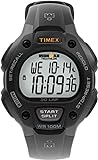
Overview: The Timex Ironman Classic 30 is a testament to simplicity and reliability in an age of overcomplicated smartwatches. This digital workhorse focuses on essential timing functions without batteriesapping connectivity, making it perfect for athletes who value durability and straightforward operation above all else.
What Makes It Stand Out: The iconic INDIGLO backlight remains one of the best illumination systems available, providing perfect low-light visibility. The 100-hour chronograph with 30-lap memory and 24-hour countdown timer covers serious training needs without software bloat. Its 38mm resin construction is practically indestructible, and the three time zones plus versatile alarm settings make it surprisingly functional for travelers.
Value for Money: At this price point, you’re getting decades of Timex reliability and a watch that will likely outlast any smartwatch by years. There are no subscription fees, no charging cables, and no planned obsolescence. For basic timing and durability, nothing delivers better value—it’s a one-time purchase that performs flawlessly until the battery eventually needs replacing.
Strengths and Weaknesses: Strengths include legendary toughness, crystal-clear display, intuitive button operation, exceptional battery life (years, not days), and the unmatched INDIGLO backlight. It’s also incredibly lightweight. Weaknesses are obvious: no heart rate monitoring, no GPS, no smartphone connectivity, and the resin strap can become brittle over time. The acrylic lens scratches more easily than sapphire crystal.
Bottom Line: If you need a bombproof watch that tells time, times intervals, and handles basic training chronograph functions without ever needing a charge, the Ironman Classic 30 is unbeatable. It’s the antidote to smartwatch fatigue.
4. Garmin Forerunner 165, Running Smartwatch, Colorful AMOLED Display, Training Metrics and Recovery Insights, Black

Overview: The Forerunner 165 elevates Garmin’s mid-range running watch category with a stunning AMOLED display and advanced training intelligence. It bridges the gap between the basic Forerunner 55 and premium models, offering serious runners deeper insights into performance and recovery without the flagship price tag.
What Makes It Stand Out: The brilliant AMOLED touchscreen is a game-changer for visibility and interaction, while the morning report delivers a comprehensive snapshot of sleep quality, recovery, HRV status, and training outlook. Garmin Coach provides adaptive training plans, and personalized daily workouts adjust based on your performance and recovery metrics. The 25+ activity profiles cover virtually every training modality.
Value for Money: While pricier than the Forerunner 55, the 165 justifies its cost with significant upgrades: the AMOLED display alone adds premium feel, while recovery insights and HRV tracking provide data previously reserved for $400+ watches. For committed runners who train daily, these features accelerate progress. However, casual runners may find the 55 sufficient.
Strengths and Weaknesses: Strengths include the gorgeous display, comprehensive training and recovery metrics, lightweight 43mm design, and robust Garmin Connect integration. The button-plus-touchscreen interface works flawlessly. Weaknesses include reduced battery life compared to the 55 (11 days vs. 14), a price jump that may deter beginners, and limited smartwatch features relative to Apple Watch. GPS accuracy, while good, isn’t quite Fenix-level.
Bottom Line: The Forerunner 165 is the sweet spot for dedicated runners wanting advanced analytics and a premium display. If you’ll use the recovery insights and adaptive training, it’s worth every penny. Otherwise, stick with the 55.
5. LIVIKEY Fitness Tracker Watch with Heart Rate Monitor, Activity Tracker with Pedometer, Sleep Monitor, Calories & Step Counter, IP68 Waterproof Smart Watches for Women Men Fitness Watch for Sports

Overview: The LIVIKEY Fitness Tracker is an entry-level wearable that delivers core health monitoring features at an impulse-buy price point. It strips away premium complexities to focus on fundamental activity tracking for budget-conscious users taking their first steps into fitness monitoring.
What Makes It Stand Out: The IP68 waterproof rating is impressive for this price tier, allowing swim tracking and shower wear that many budget trackers can’t handle. The 5-7 day battery life is respectable, and the automatic heart rate monitoring provides continuous data without manual intervention. With nine sport modes, it covers basic activities adequately.
Value for Money: This tracker redefines budget fitness tech—you’re getting heart rate monitoring, sleep analysis, and waterproofing for less than a dinner out. While it can’t compete with Garmin or Fitbit accuracy, it delivers the essentials for a fraction of the cost. For users who simply want step counts, calorie estimates, and basic heart rate trends, the value is undeniable.
Strengths and Weaknesses: Strengths include the ultra-low price, IP68 waterproofing, simple one-button operation, and surprisingly good battery life. The companion app provides decent data visualization for the cost. Weaknesses are substantial: no built-in GPS means phone-tethered tracking, only nine sport modes limits versatility, notification handling is basic, sensor accuracy is questionable, and brand support is uncertain. The build feels plasticky and the strap quality is mediocre.
Bottom Line: Buy the LIVIKEY if you’re testing whether you’ll actually use a fitness tracker and want to spend minimal money. For reliable data and durability, save up for a reputable brand instead.
6. Smart Watch for Men Women, 2.0" HD Touchscreen Fitness Tracker, Bluetooth Calls/Notifications, IP68 Waterproof, 100+ Sport Modes Fitness Watch, Heart Rate Sleep Monitor Smartwatch for Android iOS

Overview: This versatile smartwatch delivers premium features at an accessible price point, targeting users who want comprehensive fitness tracking without breaking the bank. The 2.0-inch HD display immediately catches attention, offering exceptional readability for notifications and health data at a glance, while compatibility with both Android and iOS ensures broad appeal.
What Makes It Stand Out: The expansive 120+ sport modes coverage exceeds most competitors, while Bluetooth calling capability with a built-in speaker and microphone adds genuine convenience. IP68 waterproofing ensures durability across all activities, and the 24/7 health monitoring suite provides continuous heart rate and sleep analysis with personalized insights and habit reminders.
Value for Money: Positioned firmly in the budget category, this watch undercuts major brands by hundreds while delivering comparable core functionality. The inclusion of custom dial uploads and comprehensive notification support makes it an excellent alternative to premium models for cost-conscious consumers seeking maximum versatility.
Strengths and Weaknesses: Strengths include the large vibrant display, extensive sport tracking, reliable waterproofing, and Bluetooth calling. Weaknesses involve an unproven brand reputation, likely basic GPS accuracy, inability to reply to notifications, and potentially shorter long-term software support compared to established manufacturers.
Bottom Line: Ideal for first-time smartwatch buyers or fitness enthusiasts seeking maximum features on a budget. While it lacks the refinement of flagship models, its impressive spec sheet and affordable price make it a compelling entry-level choice.
7. Garmin Forerunner 55, GPS Running Watch with Daily Suggested Workouts, Up to 2 Weeks of Battery Life, White

Overview: The Garmin Forerunner 55 is a purpose-built running watch that strips away unnecessary smartwatch fluff to deliver focused, reliable performance for dedicated runners. With up to two weeks of battery life and comprehensive GPS tracking, it’s engineered for those who prioritize training data over flashy features, making it a reliable daily companion.
What Makes It Stand Out: Garmin’s PacePro technology provides GPS-based pace guidance for race day strategy, while daily suggested workouts adapt to your training load and recovery. The watch predicts race times and estimates finish times, offering serious athletes actionable insights that genuinely improve performance without overwhelming complexity.
Value for Money: Though priced higher than generic fitness trackers, the Forerunner 55 justifies its cost through Garmin’s proven ecosystem, exceptional battery efficiency, and specialized running features. It’s a mid-range investment that delivers professional-grade training tools without the premium price tag of flagship Forerunner models.
Strengths and Weaknesses: Strengths include outstanding battery life, accurate wrist-based heart rate monitoring, reliable GPS tracking, and a streamlined, easy-to-use interface. Weaknesses involve limited smart features, no mapping capabilities, a monochrome display, and sport-specific focus that may disappoint users seeking a general-purpose smartwatch.
Bottom Line: Perfect for runners who want a no-nonsense training tool from a trusted brand. If you’re serious about improving your running performance and don’t need extensive smartwatch functionality, the Forerunner 55 is an excellent, reliable choice that delivers exceptional value.
8. COROS PACE 3 GPS Sport Watch - Lightweight, Comfortable Running Watch, 17-Day Battery Life, Accurate GPS, Heart Rate Monitor, Navigation, Sleep Tracking, Training Plan, Run, Bike - Black Silicone

Overview: The COROS PACE 3 redefines the performance-to-weight ratio in GPS sport watches, delivering premium features in an astonishingly light 30-gram package. Designed for athletes who obsess over every gram, this watch offers comprehensive tracking without the wrist fatigue common with bulkier competitors, making it ideal for 24/7 wear.
What Makes It Stand Out: The dual-frequency GPS chipset ensures unparalleled accuracy even in challenging urban environments, while the 24-day battery life in daily use mode is simply class-leading. The integrated route planner with breadcrumb navigation transforms it into a genuine outdoor adventure tool, not just a fitness tracker, setting it apart from simpler models.
Value for Money: Positioned in the premium segment, the PACE 3 commands a higher price but delivers exceptional value for serious athletes. The combination of ultra-lightweight design, superior battery performance, and advanced GPS technology makes it a worthwhile investment over cheaper alternatives that compromise on accuracy and comfort.
Strengths and Weaknesses: Strengths include the featherweight construction, industry-leading battery life, highly accurate GPS tracking, and robust navigation features. Weaknesses involve a smaller 1.2-inch display, steep learning curve for non-technical users, limited third-party app ecosystem, and a price point that may deter casual fitness enthusiasts.
Bottom Line: An outstanding choice for dedicated runners, triathletes, and outdoor enthusiasts who demand the best in accuracy and endurance. If you prioritize performance metrics and comfort over smartwatch conveniences, the PACE 3 is worth every penny.
9. Smart Watch, 2026 AMOLED 1.43" Fitness Smartwatch for Men Women, Bluetooth 5.4 Call, 130+Sports Modes, 60+Days Flashlight, Heart Rate/Sleep Monitor, IP68 Waterproof Activity Tracker for Android iOS

Overview: The Soudorv smartwatch positions itself as a rugged, adventure-ready companion with military-grade durability and unique outdoor features. Its 1.43-inch AMOLED display and 130+ sport modes suggest a capable fitness tracker, while the integrated LED flashlight and compass cater specifically to outdoor enthusiasts who venture beyond paved paths.
What Makes It Stand Out: The bright LED flashlight with 5-meter range is genuinely useful for camping and nighttime activities, while the claimed military standard certification promises resilience in extreme conditions. Bluetooth 5.4 ensures stable connectivity, and the extensive customization options with 250+ watch faces offer personalization rarely seen in rugged watches at this price point.
Value for Money: This watch sits in the mid-range price bracket, offering a compelling package for outdoor adventurers. While not as cheap as generic alternatives, its specialized features justify the premium over basic fitness trackers, though the “2026” branding raises questions about marketing gimmicks versus genuine innovation.
Strengths and Weaknesses: Strengths include the rugged build quality, useful LED flashlight, comprehensive sport modes, vibrant AMOLED display, and strong Bluetooth connectivity. Weaknesses involve a relatively unknown brand reputation, potentially bulky design for daily wear, questionable long-term software support, and the flashlight’s impact on battery life during extended use.
Bottom Line: An excellent option for hikers, campers, and outdoor workers who need a tough watch with practical features. If you value durability and utility over brand prestige, this military-inspired smartwatch delivers solid performance for adventure seekers.
10. Amazfit Bip 6 Smart Watch 46mm, 14 Day Battery, 1.97" AMOLED Display, GPS & Free Maps, AI, Bluetooth Call & Text, Health, Fitness & Sleep Tracker, 140+ Workout Modes, 5 ATM Water-Resistance, Black

Overview: The Amazfit Bip 6 strikes an impressive balance between smartwatch convenience and fitness tracking prowess, featuring a large 1.97-inch AMOLED display and comprehensive health monitoring. With 140+ workout modes and AI-powered coaching, it’s designed for users who want extensive functionality without premium pricing, making it accessible to a broad audience.
What Makes It Stand Out: The inclusion of free downloadable maps with turn-by-turn navigation is remarkable at this price point, typically reserved for much more expensive watches. Five satellite system support ensures rapid GPS acquisition and accurate tracking, while the 14-day battery life eliminates nightly charging anxiety that plagues many competitors.
Value for Money: The Bip 6 offers flagship-level features at a mid-range price, significantly undercutting Garmin and Apple while delivering comparable core functionality. The combination of mapping, extensive workout modes, and robust health tracking represents exceptional value for budget-conscious buyers seeking maximum capability without compromise.
Strengths and Weaknesses: Strengths include the vibrant large display, impressive battery life, accurate multi-system GPS, comprehensive health monitoring, and 5 ATM water resistance. Weaknesses involve Amazfit’s less mature app ecosystem, limited third-party integration, occasional software quirks, and brand perception compared to established players in the market.
Bottom Line: A fantastic all-rounder for users wanting premium features without the premium price tag. If you prioritize functionality, battery life, and value over brand prestige, the Bip 6 delivers an outstanding package that rivals watches costing twice as much.
Why a Dedicated Running Watch Matters for Half-Marathon Success
A half-marathon represents a unique physiological challenge—long enough to demand strategic pacing and fuel management, yet short enough that every second counts. Unlike marathon training, where survival and consistency often take priority, half-marathon prep requires a nuanced approach to threshold work, tempo runs, and race-pace intervals that consumer smartwatches simply aren’t built to handle.
Dedicated running watches provide millisecond-accurate GPS tracking, advanced running dynamics, and training load algorithms specifically calibrated for the 8-16 week training cycles typical of half-marathon preparation. They transform subjective feelings into objective data, helping you distinguish between normal fatigue and the early warning signs of overtraining syndrome. For men, who statistically tend to push through pain signals longer than advisable, this data-driven restraint can be the difference between peak performance on race day and a stress fracture six weeks out.
Core GPS and Navigation Features for 2026
Multi-Band GNSS Accuracy
By 2026, single-frequency GPS has become obsolete for serious runners. Look for watches that support multi-band GNSS, which simultaneously taps into multiple satellite constellations (GPS, GLONASS, Galileo, BeiDou) across different frequencies. This technology virtually eliminates the signal bounce in urban canyons and tree cover that can add 2-3% distance error—enough to throw off your pacing strategy in a half-marathon.
For half-marathon training, satellite pre-caching is crucial. The best watches automatically download 7-14 days of predicted satellite positions, reducing acquisition time from minutes to seconds and ensuring you don’t miss capturing that critical tempo run because you’re stuck waiting for a signal.
Navigation and Route Planning
While you won’t need turn-by-turn directions on race day, advanced navigation features transform your long runs. Look for watches that allow you to upload GPX routes and provide breadcrumb trails with off-course alerts. This capability lets you explore new training territories without the cognitive load of navigation, keeping your focus on effort and form. Some 2026 models now integrate crowd-sourced route popularity data, helping you discover verified distances and elevation profiles uploaded by local running communities.
Heart Rate Monitoring: From Basics to Advanced
Optical Heart Rate Sensors
Wrist-based optical sensors have matured significantly, but their accuracy still varies dramatically. For half-marathon training, you need sensors that maintain accuracy at high intensities—where heart rate can exceed 180 bpm—and during rapid changes in effort. The key differentiator in 2026 is sensor array density: premium watches now use 6-8 LED arrays with multiple photodiodes, dramatically improving signal-to-noise ratio during sweaty, high-impact running.
Consider the sensor bump height and watch weight. Men with smaller wrists or those who prefer a snug fit should look for watches with recessed sensors that don’t dig into the wrist bone during long runs. A watch that shifts during arm swing creates noise in your heart rate data, rendering those gorgeous training graphs meaningless.
Heart Rate Variability (HRV) Insights
HRV has evolved from a curiosity to a cornerstone metric for half-marathon training. The best watches now provide overnight HRV tracking that integrates with your training load to give daily readiness scores. This is particularly valuable during the taper phase, when distinguishing between pre-race jitters and actual accumulated fatigue becomes critical. Look for watches that display HRV trends over 7-30 days rather than single-night snapshots, as this longitudinal view reveals your true adaptation to training stress.
Battery Life: Matching Your Training Volume
Half-marathon training typically includes 1-2 long runs weekly (60-150 minutes) plus 3-4 shorter sessions. Your watch needs to survive at least 15-20 hours of active GPS tracking between charges, but the real consideration is multi-day battery with all health sensors active. A watch that dies mid-week loses the continuous data stream that powers recovery recommendations.
In 2026, solar charging has become standard on premium models, adding 15-30% battery extension for outdoor runners. For men who train in sunny climates or during daylight hours, this feature eliminates the anxiety of a dead watch before Sunday’s long run. Pay attention to battery drain in smartwatch mode versus GPS mode—a watch that lasts 14 days casually but only 10 hours with GPS won’t make it through your training block without constant charging.
Training Metrics That Actually Matter for 13.1 Miles
VO2 Max and Running Performance Indicators
While VO2 max gets the headlines, its rate of change is more predictive for half-marathon performance. Quality watches update this metric weekly and show trends relative to your age and gender group. For men, who typically see VO2 max values 15-20% higher than women, the key is watching how this number responds to specific workouts—does your tempo run day produce measurable improvement?
Look for watches that integrate VO2 max with running economy metrics like vertical oscillation and ground contact time. These biomechanical measures help you understand whether you’re getting faster through improved fitness or better efficiency—a crucial distinction when fine-tuning form for race day.
Training Load and Recovery Advisories
Modern training load algorithms have moved beyond simple mileage totals to integrate intensity, duration, and your personal recovery capacity. The best systems use machine learning to recognize that a 45-minute interval session stresses your system differently than a 90-minute easy run, even if the “calories burned” are similar.
For half-marathon training, recovery advisories should be specific: “Ready for hard effort,” “Maintain easy pace only,” or “Rest recommended.” Vague “training status” indicators don’t help you decide whether to attempt that threshold workout or push it to tomorrow. The most advanced watches now factor in lifestyle data—sleep quality, HRV, even stress levels from heart rate patterns—to provide truly personalized guidance.
Half-Marathon Specific Training Features
Customizable Interval and Pace Workouts
Your watch should function as a programmable coach on your wrist. Look for devices that allow you to create complex workouts: warm-up, 6x1km at goal pace with 90-second recoveries, cool-down. The interface for programming these should be intuitive—either on the watch itself or through a companion app. During execution, you want clear visual and haptic cues for pace targets, with real-time feedback on whether you’re in the correct zone.
Advanced 2026 models now include “adaptive intervals” that automatically adjust your recovery duration based on how quickly your heart rate drops, ensuring you hit the intended training stimulus rather than blindly following preset times.
Race Predictor and Time Goal Tools
While race predictors based on VO2 max are notoriously optimistic, the newest generation integrates recent workout performance and fatigue levels to give more realistic projections. Look for watches that allow you to input a target half-marathon time and then generate a complete training plan with daily workouts, taper schedule, and even nutrition reminders.
The best implementations include a “race day simulator” feature that uses your historical data to model how you’ll feel at mile 8, 10, and 12 based on your current fitness, helping you develop a concrete pacing strategy rather than hoping for the best.
Physical Design and Wearability for Male Athletes
Watch Size and Wrist Fit Considerations
Men’s wrists average 7-7.5 inches in circumference, but watch manufacturers often default to designs that overwhelm smaller wrists or feel undersized on larger ones. The sweet spot for most male runners is a case diameter between 42-47mm and weight under 55 grams. Anything heavier creates wrist fatigue during 90+ minute runs, affecting form.
Pay attention to lug-to-lug length—the distance between strap attachment points. This measurement determines whether the watch will sit flat on your wrist or overhang the edges, which causes instability and sensor noise. Quick-release straps are non-negotiable, allowing you to swap between a breathable sport band for training and a more professional option for daily wear.
Display Technology and Readability
In 2026, AMOLED displays have largely replaced memory-in-pixel (MIP) screens, offering vibrant colors and crisp data fields. However, brightness matters more than resolution for running. Look for displays that reach 1000+ nits and include an “always-on” mode that doesn’t kill battery life. The ability to customize data screens with 4-6 metrics visible at once lets you monitor pace, heart rate, distance, and elapsed time without button presses—critical when you’re at threshold effort.
Consider touchscreen versus button navigation. While touchscreens are sleek, physical buttons allow operation with sweaty fingers or gloves and provide tactile feedback without breaking stride. The best watches offer hybrid control: buttons for workout functions, touchscreen for casual menu navigation.
Durability and Water Resistance Standards
Half-marathon training happens in all conditions. Your watch needs 5ATM water resistance minimum, but the real test is IP rating for dust and sweat intrusion. Look for IP68 certification, which guarantees protection against continuous immersion and particulate matter. Salt water resistance matters if you do recovery runs on the beach—corrosion can kill button contacts in months.
Sapphire crystal displays, once limited to luxury models, have become standard on mid-tier running watches by 2026. This material is virtually scratch-proof against trail debris and accidental wall scrapes. Gorilla Glass, while cheaper, will show micro-scratches within a training cycle, eventually reducing display clarity when you need it most.
The Smartwatch vs. Dedicated Running Watch Debate
The line has blurred, but fundamental differences remain. Smartwatches prioritize app ecosystems, notifications, and lifestyle features, often sacrificing GPS accuracy and battery life. Dedicated running watches focus entirely on training metrics, often running proprietary operating systems with limited third-party apps.
For half-marathon training, ask yourself: do you want a device that excels at one thing or does many things adequately? If you’re already carrying a phone, a dedicated running watch plus basic notifications might be optimal. If you run phone-free, a smartwatch with LTE can be compelling—but verify that its GPS performance doesn’t degrade when streaming music. Most serious runners find that a dedicated watch paired with a basic fitness tracker for daily wear provides the best of both worlds.
Software Ecosystem and Third-Party Integration
Your watch is only as good as its data destination. Evaluate the companion app’s depth: does it provide detailed workout analysis, long-term trend visualization, and export options? The ability to sync seamlessly with platforms like TrainingPeaks, Strava, or Final Surge is essential if you work with a coach or use structured training plans.
In 2026, API openness has become a key differentiator. Some manufacturers lock your data into their ecosystem, while others allow full access to raw metrics. Look for watches that support direct sensor pairing with foot pods, chest straps, and power meters—this future-proofs your setup and ensures you can use the best-in-class sensor for each metric rather than being limited to the watch’s built-in capabilities.
Budget Tiers: Finding Value at Every Price Point
Entry-Level ($150-$250): The Essentials Only
Watches in this range now include multi-band GPS and basic heart rate monitoring—features that cost $500+ just two years ago. What you sacrifice is advanced training analytics, build quality, and battery life. These devices work perfectly for runners following simple plans based on pace and distance, but they lack the recovery insights and training load management that prevent overtraining.
Mid-Range ($250-$450): The Sweet Spot
This tier offers 90% of what elite watches provide: accurate sensors, 15-20 hour GPS battery, training status metrics, and route navigation. The compromises are typically in materials (polymer cases vs. titanium) and advanced features like running power and advanced sleep staging. For most male runners targeting their first or second half-marathon, this range offers the best return on investment.
Premium ($450+): No Compromises
Premium watches justify their cost through marginal gains: slightly better GPS accuracy in challenging conditions, week-long battery life, premium materials, and cutting-edge features like real-time coach feedback and injury prediction algorithms. For sub-1:30 runners or those training for multiple races yearly, these features add up to meaningful performance improvements. The durability also means the watch will survive three to four training cycles, amortizing the cost.
Emerging Technologies to Watch in 2026
AI-Powered Form Coaching
Next-generation watches now analyze your wrist trajectory in real-time to detect form deterioration—like increased vertical oscillation or asymmetric ground contact time—as you fatigue. This goes beyond post-run analysis to provide live haptic alerts when your form breaks down, helping you maintain efficiency during those soul-crushing mile repeats.
Blood Glucose Integration
Non-invasive blood glucose monitoring has reached viability in 2026. While still a premium feature, this data helps you perfect fueling strategies, showing exactly when your glycogen stores dip during long runs. For men, who often under-fuel during training, this objective data can prevent the bonk that derails race day performance.
Environmental Sensors
Barometric altimeters have become hyper-accurate, detecting 10cm elevation changes, while built-in thermometers and humidity sensors now factor environmental stress into your training load calculation. Running a tempo session in 85°F heat with 80% humidity creates a different physiological demand than the same workout in 60°F dry conditions—2026’s best watches quantify this difference automatically.
Health Monitoring Beyond Running Performance
Half-marathon training stresses your entire system, not just your legs. Comprehensive health monitoring includes sleep staging analysis, stress tracking via electrodermal activity, and even blood oxygen saturation during sleep. For men, who have higher rates of sleep apnea and cardiovascular issues, overnight SpO2 monitoring can reveal underlying health concerns that affect training quality.
Look for watches that integrate these health metrics into your training plan. A poor sleep night should automatically adjust next morning’s workout recommendation, not just display a sleep score you have to interpret manually. The most sophisticated systems now track your “physiological age”—a composite metric that shows whether your training is making you biologically younger or accelerating aging through excessive stress.
Making Your Final Decision: A Personalized Approach
Start by auditing your current training: Do you follow structured plans or run by feel? Do you train with a phone or prefer minimalism? Measure your wrist circumference and consider your typical running environment. Then prioritize three non-negotiable features—perhaps GPS accuracy, battery life, and training load tracking—and use these to filter options.
Test the watch in person if possible. The button feel, display readability in sunlight, and wrist stability during a short jog reveal more than any spec sheet. Check the return policy; many retailers now offer 30-day trial periods for wearables. Most importantly, choose a watch that excites you to use daily—the best technology is worthless if it sits in a drawer because the interface frustrates you.
Remember, the goal isn’t to collect the most data but to get actionable insights that make you a faster, healthier runner. A $300 watch you understand beats a $700 watch you find overwhelming every time.
Frequently Asked Questions
How accurate are wrist-based heart rate monitors during half-marathon pace efforts?
Modern multi-LED optical sensors achieve 95-97% accuracy compared to chest straps at steady-state efforts, but accuracy drops during rapid pace changes or above 180 bpm. For interval sessions, consider a compatible chest strap for the most reliable data, especially if you have wrist tattoos or a dense arm hair pattern that can interfere with optical readings.
What’s the minimum battery life I need for half-marathon training?
Aim for 15-20 hours of active GPS tracking to cover a full week of training without mid-week charging. If you run phone-free with music streaming, increase that requirement to 25+ hours as LTE connectivity drains battery 30-40% faster. Solar charging can extend this by 15-30% for outdoor runners.
Do I need a watch with maps for half-marathon training?
Not necessarily. While maps are invaluable for trail runners, half-marathon training primarily uses breadcrumb trails and route following. A watch that shows your position relative to a loaded GPX route with off-course alerts provides 90% of the functionality at a lower cost and with better battery life than full topographic maps.
How important is watch weight for a half-marathon?
Every gram matters over 13.1 miles. Watches over 60 grams can alter arm swing mechanics, especially as fatigue sets in. Most male runners find the 45-55 gram range optimal—light enough to forget but heavy enough to feel substantial and stay stable on the wrist during sprints.
Can a running watch help predict my half-marathon time accurately?
Race predictors have improved but still tend to be optimistic by 3-5% for most runners. The best approach is to use the predictor as a ceiling, then adjust based on recent tempo run performance and long-run pace. Look for watches that let you input a target time and create a specific training plan, as these tend to be more realistic than generic VO2 max-based calculations.
Should I choose a touchscreen or button-only watch?
For running, physical buttons win. They work with sweaty hands, gloves, and provide tactile feedback without looking. The best 2026 watches offer hybrid controls: dedicated buttons for start/stop/lap functions during workouts, with touchscreen navigation for settings and data review when you’re not running.
How do I know if a watch will fit my wrist properly?
Measure your wrist circumference and compare it to the watch’s lug-to-lug length—this should be at least 5mm shorter than your wrist width to avoid overhang. Most brands now offer virtual try-through AR in their apps, but nothing beats trying it on. The watch should sit flat without rocking, and you should be able to fit one finger between the strap and your wrist.
What’s the difference between training load and training status?
Training load quantifies your cumulative stress (volume × intensity) over 7-30 days. Training status interprets this load against your recovery metrics (HRV, sleep) to tell you if you’re productive, peaking, strained, or detraining. For half-marathon prep, status is more actionable—it tells you whether to push or back off today.
Are premium watches worth double the price of mid-range options?
For runners targeting times under 1:40 or training for multiple races yearly, yes. The marginal gains in accuracy, durability (3-4 year lifespan vs. 1-2), and advanced metrics like running power and injury prediction provide meaningful advantages. For first-timers or those running for completion, mid-range watches deliver 90% of the functionality at half the cost.
How will running watches evolve after 2026?
Expect deeper AI integration with personalized coaching that adapts to your unique physiology, non-invasive hydration monitoring, and integration with smart shoes that provide ground contact data without foot pods. The trend is toward predictive analytics—watches that don’t just record your training but anticipate how modifications will affect your race performance before you implement them.
See Also
- Top 10 Best Running Watches for Men for Marathon Training in 2026
- 10 Game-Changing Running Watches for Men for Marathon Recovery Tracking in
- 10 Must-Have Men’s Running Shoes for Half Marathon Training in 2026
- 10 Best Budget Running Watches for Men Under $80 for Beginners in 2026
- 10 Best Digital Watches for Men for Cold Weather Training in 2026