Table of Contents
The chronograph has evolved from a specialized tool for 19th-century astronomers into one of the most coveted complications in modern horology. Yet for many enthusiasts, the word “chronograph” still conjures images of price tags that demand second mortgages. Here’s the reality that watch collectors are discovering in 2026: the democratization of watchmaking has reached its golden age, where precise engineering, durable construction, and sophisticated design no longer require emptying your savings account.
Whether you’re timing your morning espresso extraction, tracking lap splits at the track, or simply appreciating the mechanical ballet happening beneath the dial, today’s affordable chronographs deliver legitimate heritage-level quality at fractions of historical prices. This guide cuts through marketing noise and specification sheets to equip you with the knowledge to identify true value—watches that’ll outlast trends and maintain their performance long after the honeymoon phase fades.
Top 10 Chronograph Watches For Men
Detailed Product Reviews
1. Fossil Men’s Neutra Quartz Stainless Steel and Leather Chronograph Watch, Analog Watches for Men, Color: Silver, Brown (Model: FS5380)

Overview: The Fossil Neutra FS5380 blends mid-century modern aesthetics with contemporary chronograph functionality. This 44mm timepiece features a cream satin dial adorned with Roman numerals and stick indices, powered by a reliable quartz movement. The brown genuine leather strap complements the silver-tone stainless steel case, creating a versatile watch that transitions seamlessly from office to weekend wear. With 50-meter water resistance and a hardened mineral crystal, it offers practical durability for daily use.
What Makes It Stand Out: The Neutra’s architectural inspiration shines through its balanced proportions and symmetrical dial layout, distinguishing it from typical fashion watches. Fossil’s commitment to strap interchangeability allows owners to customize their look using any 22mm Fossil strap, significantly extending versatility. The cream dial with silver accents provides excellent legibility while maintaining a sophisticated, vintage-tinged appearance that rarely appears at this price point.
Value for Money: Positioned in the $100-$150 range, the Neutra competes directly with fashion watches from brands like Daniel Wellington and MVMT, while offering actual chronograph functionality. The genuine leather strap and Fossil’s brand recognition add value, though serious enthusiasts will note the mineral crystal and basic quartz movement. For style-conscious buyers, the design pedigree justifies the premium over no-name alternatives.
Strengths and Weaknesses: Strengths include striking mid-century design, versatile aesthetic, strap interchangeability, and reliable quartz movement. Weaknesses are the limited 50m water resistance, absence of sapphire crystal, and Fossil’s fashion-watch positioning which may not satisfy serious collectors. The 44mm case may also overwhelm smaller wrists.
Bottom Line: Ideal for buyers prioritizing style and brand recognition over horological prestige. The Neutra delivers legitimate aesthetic appeal with adequate functionality, making it a solid choice for a first “nice” watch or a dependable daily wearer.
2. Fossil Men’s Nate Quartz Stainless Steel Chronograph Watch, Color: Black (Model: JR1401)

Overview: The Fossil Nate JR1401 makes a bold statement with its oversized 50mm blacked-out profile. This chronograph features a monochromatic black stainless steel case and matching bracelet, creating an aggressive, tactical aesthetic. The black dial with gray accents houses quartz chronograph functionality with a date window, protected by hardened mineral crystal. With 50-meter water resistance, it’s built for daily wear, though its substantial presence demands attention and wrist space.
What Makes It Stand Out: Nate’s unapologetically large 50mm case sets it apart in the fashion watch segment, catering specifically to buyers wanting maximum wrist presence. The all-black treatment extends from case to bracelet, creating a cohesive, modern look that works equally well with streetwear or casual business attire. The bracelet’s removable links and fold-over clasp provide a customized fit rarely optimized in this price category.
Value for Money: At approximately $120-$160, the Nate offers full stainless steel construction and chronograph features that undercut traditional sport watch brands. The bracelet alone adds significant value compared to leather-strapped competitors. However, the basic quartz movement and mineral crystal reflect its fashion-watch DNA, making it less compelling for enthusiasts seeking mechanical depth or premium materials.
Strengths and Weaknesses: Strengths include commanding aesthetic, steel bracelet with adjustable fit, versatile black finish, and solid brand backing. Weaknesses are the potentially unwearable 50mm size for many wrists, significant weight, basic movement, and limited water resistance that undermines its sporty appearance. The mineral crystal scratches more easily than sapphire.
Bottom Line: Perfect for those seeking bold, contemporary style on a budget. The Nate delivers impressive visual impact and reasonable quality, but its massive size requires careful consideration. Avoid if your wrist circumference is under 7 inches.
3. LN LENQIN Mens Watches Analog Quartz Watch for Men Waterproof Men’s Wrist Watches Luminous Luxury Fashion Business Casual Watch Date with Leather Strap

Overview: The LN LENQIN positions itself as an accessible fashion watch with luxury aesthetics at a bargain price point. This quartz chronograph-style timepiece features a 40mm case with three decorative sub-dials that enhance visual complexity without adding functionality. The genuine leather strap and mineral glass crystal complete the package, while 3ATM water resistance handles basic daily exposure. It’s designed as an entry-level accessory for style experimentation rather than a serious timekeeping instrument.
What Makes It Stand Out: The primary differentiator is its aggressive pricing, often under $30, making it one of the most affordable ways to achieve a “chronograph” aesthetic. The brand’s emphasis on 24-hour customer service provides unusual support confidence for this segment. Its classic dial design successfully mimics higher-end watches, allowing budget-conscious buyers to test styles before investing in premium pieces.
Value for Money: Unbeatable for pure cost-to-appearance ratio. You’re getting a functional quartz watch that looks significantly more expensive than its price suggests. However, the non-working subdials represent a fundamental compromise, and the 3ATM rating is barely splash-proof. Compared to Timex or Casio at $50, the LENQIN sacrifices durability and brand heritage for maximum affordability.
Strengths and Weaknesses: Strengths include ultra-low price, decent leather strap, attractive dial design, and responsive customer service. Critical weaknesses are the fake subdials that betray its budget nature, minimal water resistance, unknown long-term reliability, and lack of brand prestige. The mineral glass offers basic scratch protection but isn’t premium.
Bottom Line: A disposable fashion accessory rather than a lasting timepiece. Purchase if you want to experiment with style on an extreme budget, but temper expectations regarding functionality and longevity. Not recommended for daily wear or gifting to watch enthusiasts.
4. Timex Men’s Waterbury Classic Chrono 40mm Stainless Steel Quartz Dress Watch with Leather Strap, Brown, 20 (Model: TW2V30800VQ)
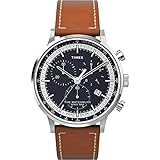
Overview: The Timex Waterbury Classic Chrono delivers heritage-inspired design in a modest 40mm package. This quartz chronograph features a navy and white dial with full markers and a 30-minute timer measuring to 1/20th second. The brown genuine leather strap with quick-release spring bars enables effortless swapping, while the silver-tone stainless steel case houses Timex’s signature Indiglo backlight. With 30-meter water resistance, it’s positioned as a dress-casual watch prioritizing convenience and legibility over sport capability.
What Makes It Stand Out: The Indiglo illumination system remains a Timex exclusive, providing superior low-light visibility compared to conventional lume. Quick-release spring bars are rare at this price point, making strap changes tool-free and encouraging versatility. The 40mm case size consciously addresses the trend toward more modest, vintage-proportioned watches, fitting comfortably on wrists of all sizes.
Value for Money: Typically priced between $60-$90, the Waterbury offers legitimate chronograph functionality and brand heritage that generic fashion watches cannot match. The Indiglo feature and quick-release straps add tangible utility value. While 30m water resistance is limiting and the mineral crystal is standard, Timex’s reputation for durability justifies the modest premium over bottom-tier brands.
Strengths and Weaknesses: Strengths include perfectly versatile 40mm sizing, brilliant Indiglo illumination, easy strap changes, and trusted brand reliability. Weaknesses are the lowest water resistance in this comparison, basic quartz movement, and dial design that some may find overly busy. The navy/white color scheme limits formal wear matching.
Bottom Line: An excellent everyday watch for those valuing practicality and heritage over flash. The Waterbury Classic Chrono excels as a reliable daily wearer with thoughtful features, though its water resistance requires careful ownership. Perfect for office environments and casual weekends.
5. Citizen Men’s Eco-Drive Weekender Brycen Chronograph Watch in Stainless Steel, Brown Leather Strap, Ivory Dial (Model: CA0649-06X)
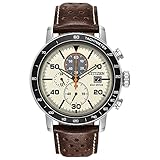
Overview: The Citizen Brycen CA0649-06X represents a significant step-up in watchmaking credibility, featuring the brand’s renowned Eco-Drive solar technology. This 43mm chronograph harnesses light to perpetually power its quartz movement, eliminating battery changes. The ivory dial with silver-tone stainless steel case and brown leather strap creates a classic sport-luxe aesthetic. With 100-meter water resistance and a 5-year limited warranty, Citizen positions this as a durable, low-maintenance performance timepiece for discerning buyers.
What Makes It Stand Out: Eco-Drive technology fundamentally separates this from battery-dependent competitors, offering decades of hassle-free operation with minimal environmental impact. The 100m water resistance provides genuine swimming capability beyond mere splash resistance. Citizen’s 5-year warranty demonstrates manufacturing confidence rarely seen in fashion watches. The 1/5-second chronograph measurement offers precision matching watches costing significantly more.
Value for Money: Priced around $200-$275, the Brycen commands a premium justified by advanced technology and superior specifications. While more expensive than Fossil or Timex, it eliminates $10-$15 battery replacement costs every few years and offers better longevity. Compared to entry-level Seiko or Hamilton, it provides unique solar capability at a competitive price point.
Strengths and Weaknesses: Strengths include revolutionary Eco-Drive system, excellent 100m water resistance, comprehensive warranty, precise chronograph, and respected brand heritage. Weaknesses are the higher initial cost, mineral crystal at this price tier, and conservative styling that may feel less exciting than fashion-forward alternatives. The leather strap limits water usage despite the enhanced rating.
Bottom Line: The ultimate choice for buyers prioritizing technology, reliability, and low maintenance. The Brycen justifies its premium through genuine innovation and durability, making it a smart long-term investment for a one-watch collection. Highly recommended for practical enthusiasts.
6. Fossil Men’s Grant 44mm Quartz Stainless Steel and Leather Chronograph Watch for Men, Color: Rose Gold, Blue (Model: FS4835)

Overview: The Fossil Grant FS4835 delivers vintage-inspired sophistication with its 44mm rose gold case and rich navy sunray dial. This chronograph combines Roman numeral markers with three functional subdials tracking minutes, seconds, and 24-hour time. The genuine blue leather strap with buckle closure complements the bold aesthetic, making it a versatile dress watch that transitions seamlessly from office to evening wear.
What Makes It Stand Out: Fossil’s heritage in accessible fashion watches shines through the Grant’s meticulous detailing. The layered sub-eyes create visual depth uncommon in this price tier, while the 50-meter water resistance exceeds typical dress watch standards. Its 22mm interchangeable strap system offers customization with Fossil’s extensive leather collection. The hardened mineral crystal provides everyday scratch protection for the striking rose gold and blue colorway.
Value for Money: Positioned in the mid-range segment, this watch justifies its price through brand recognition and build quality. Fossil’s warranty support and service network add tangible value compared to no-name alternatives. While quartz movements are standard here, you’re paying for design integrity and reliable customer support rather than horological prestige. It’s an excellent entry point into branded chronographs without luxury pricing.
Strengths and Weaknesses: Strengths include the eye-catching vintage design, superior 50m water resistance for a leather watch, genuine leather strap, and Fossil’s established brand reputation. The 44mm case makes a bold statement while remaining wearable for most wrists. Weaknesses are the mineral crystal (not sapphire), potential for rose gold plating wear over time, and limited chronograph precision compared to higher-end movements. The large case may overwhelm smaller wrists.
Bottom Line: An excellent choice for style-conscious buyers seeking a reputable brand name with reliable performance. The Fossil Grant offers authentic design flair and everyday practicality that fashion watches rarely match.
7. by BENYAR Watches for Men Chronograph Waterproof Luminous Date Men’s Wrist Watches Business Work Casual Sport Fashion Leather Strap Dress Watch Designer Elegant Gifts for Men

Overview: This BENYAR chronograph targets budget-conscious buyers with a multifunction quartz watch featuring a brown leather strap and classic big-face design. The watch includes three subdials, date window, and luminous markers powered by an unspecified “original imported branded movement.” Packaged as a gift-ready presentation piece, it aims to balance business formality with casual sport aesthetics.
What Makes It Stand Out: The aggressive pricing strategy is this watch’s primary differentiator, accompanied by a 2-year warranty that’s unusual for ultra-budget timepieces. Luminous functionality adds practical value, while the included gift box enhances its presentation appeal. The brand emphasizes customer service responsiveness, promising 24-hour support solutions.
Value for Money: Exceptionally affordable, this watch delivers basic chronograph functionality at a fraction of branded alternatives’ cost. However, vague movement specifications and 3ATM water resistance (splash-proof only) reflect its entry-level positioning. You’re trading long-term durability and precision for immediate affordability. It’s suitable as a starter watch or occasional wear piece rather than a daily workhorse.
Strengths and Weaknesses: Strengths include the low price point, gift packaging, warranty coverage, and versatile styling that mimics higher-end designs. The leather strap appears decent for the cost. Weaknesses are significant: 3ATM rating prohibits swimming/showering, unknown movement origin raises reliability questions, and marketing language oversells actual capabilities. Build quality likely won’t match established brands, and plating durability is questionable.
Bottom Line: A reasonable fashion accessory for tight budgets or gift-giving scenarios where expectations remain modest. Not recommended for buyers prioritizing horological quality or water resistance.
8. BY BENYAR Mens Watches Analog Quartz Chronograph Waterproof Luminous Watch for Men Business Work Sport Casual Brown Leather Band Dress Men’s Wrist Watches Elegant Gifts for Men
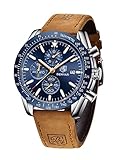
Overview: Nearly identical to its BENYAR sibling, this variant features a 45mm case with tachymeter bezel markings and three functional subdials. The brown leather strap and rose gold-tone case target the same budget-conscious demographic seeking a multifunctional timepiece. Japanese quartz movement is claimed, though specifics remain ambiguous. The design emphasizes a “unique elegant” aesthetic for business and casual contexts.
What Makes It Stand Out: The tachymeter bezel adds a motorsport-inspired element rare in this price category. At 45mm, it embraces the big-face trend more aggressively than competitors. The 2-year warranty and gift packaging maintain BENYAR’s value proposition. Luminous hands provide basic low-light visibility after light exposure.
Value for Money: Positioned as an ultra-affordable chronograph alternative, it sacrifices specifications for cost savings. The 30M/3ATM water resistance limits real-world utility to handwashing and rain exposure only. While the tachymeter scales look functional, accuracy depends on movement quality that lacks transparent verification. It’s a style piece first, instrument second.
Strengths and Weaknesses: Strengths include the sporty tachymeter aesthetic, low acquisition cost, warranty protection, and presentation-ready packaging. The 45mm size appeals to large-watch enthusiasts. Weaknesses mirror other budget chronographs: insufficient water resistance for active lifestyles, questionable long-term reliability, mineral crystal vulnerability, and leather strap quality that may degrade quickly. The brand lacks horological heritage.
Bottom Line: Suitable for fashion-forward buyers wanting tactical watch styling on a minimal budget. Treat as a disposable trend piece rather than a lasting timepiece investment.
9. NEKTOM Mens Watches with Ingold Stainless Steel and Metal Casual Waterproof Chronograph Quartz Watch Sports Watches for Men

Overview: NEKTOM’s skeleton-design watch features a gold-tone stainless steel case with exposed dial elements and 12 square-cut crystal hour markers. Powered by a Japanese quartz movement, this 3ATM-rated timepiece attempts to blend haute horlogerie aesthetics with mass-market pricing. The multifunction design includes chronograph subdials and luminous hands for basic sport-watch functionality.
What Makes It Stand Out: The skeletonized dial creates visual intrigue typically found in mechanical watches, offering a conversation-piece aesthetic. Japanese quartz movement provides a baseline of reliability compared to unspecified origins. The “ingold” plating and crystal accents aim for luxury visual cues at an accessible price point, while the one-year warranty offers modest protection.
Value for Money: Mid-tier pricing reflects the design complexity rather than material excellence. You’re paying primarily for the skeleton appearance and gold-tone finish. The 3ATM rating severely limits practical sports use, contradicting its “sports watches” marketing. Mineral crystal and unknown plating thickness suggest limited durability. It’s a compromise between style ambition and budget reality.
Strengths and Weaknesses: Strengths include the unique skeleton dial design, Japanese movement credibility, and eye-catching gold/crystal aesthetics. The watch makes a bold fashion statement. Weaknesses are critical: 3ATM water resistance is inadequate for sports, “diamonds” are likely cubic zirconia crystals, brand recognition is minimal, and the skeleton design may compromise legibility. Gold plating durability remains questionable without specifications.
Bottom Line: A novelty fashion watch for collectors wanting skeleton style without mechanical price tags. Avoid for actual sports or water exposure. Best suited for occasional wear in dry environments.
10. Bulova Men’s Marine Star Series B Stainless Steel 6-Hand Chronograph Quartz Watch, Blue Dial Style: 96B256

Overview: Bulova’s Marine Star 96B256 represents the brand’s maritime heritage through a robust 6-hand chronograph measuring 1/20-second intervals up to 60 minutes. The silver-tone stainless steel construction features a blue dial with calendar function and small seconds hand. With 100M water resistance and marine-inspired design cues, it’s built for active lifestyles while maintaining dress-watch versatility.
What Makes It Stand Out: The 6-hand chronograph movement delivers precision timing beyond standard 3-subdial designs. Bulova’s 3-year limited warranty demonstrates manufacturer confidence. The 100M water resistance rating enables swimming and snorkeling—uncommon for chronographs in this class. Mineral crystal with Bulova’s quality control ensures reliable protection. The maritime aesthetic balances sport functionality with office-appropriate styling.
Value for Money: Premium pricing reflects legitimate brand heritage and superior specifications. Compared to fashion brands, you’re investing in proven movement technology and robust water resistance. The chronograph’s 1/20-second precision offers genuine utility for timing applications. While not luxury-priced, it occupies a sweet spot between disposable fashion watches and entry-level Swiss pieces, delivering measurable performance gains.
Strengths and Weaknesses: Strengths include exceptional 100M water resistance, precise 6-hand chronograph functionality, Bulova’s established reputation, comprehensive warranty, and versatile steel construction. The design transitions seamlessly between casual and professional settings. Weaknesses include mineral crystal (not sapphire), potential for quartz movement servicing costs, and a case profile that may prove bulky for formal attire. The design prioritizes function over minimalist elegance.
Bottom Line: The top choice for buyers demanding genuine performance, brand credibility, and water-ready durability. A reliable daily wearer that justifies its premium through tangible specifications and heritage.
Understanding the Chronograph Complication
What Makes a Chronograph Tick?
At its core, a chronograph is a stopwatch integrated into a wristwatch, but that simple definition barely scratches the surface of its mechanical complexity. The complication requires an intricate system of levers, hammers, and wheels that start, stop, and reset independent of the main timekeeping function. When you depress that top pusher, you’re initiating a carefully choreographed sequence where a clutch engages, a column wheel rotates (in higher-end pieces), and a separate gear train begins recording elapsed time.
The real magic lies in the reset mechanism. Quality chronographs feature a heart-shaped cam that ensures all hands snap back to zero with perfect synchronization—no stuttering, no misalignment. This is where affordable pieces often cut corners, using simpler cam-actuated systems that, while less prestigious, can still deliver reliable performance when properly engineered. Understanding these fundamentals helps you appreciate why some budget chronographs feel crisp and satisfying while others feel mushy and imprecise.
The History and Evolution of Chronograph Watches
The chronograph’s journey from pocket watch accessory to wrist-worn essential mirrors the evolution of human endeavor itself. Louis Moinet created the first chronograph in 1816 to track astronomical events, but it was Nicolas Mathieu Rieussec’s 1821 ink-based timer for horse racing that gave us the name—derived from the Greek “chronos” (time) and “graph” (writer). The complication found its true calling in aviation and motorsports, where split-second timing meant the difference between victory and defeat.
The 2026 landscape reflects this rich heritage while embracing modern manufacturing. We’re seeing a renaissance of vintage-inspired designs reimagined with contemporary materials and production techniques. The “vintage reissue” trend has matured beyond mere aesthetic mimicry; today’s affordable chronographs capture the soul of mid-century tool watches while correcting their historical weaknesses—better seals, improved crystals, and more robust movements.
Why Chronographs Remain Relevant in 2026
In an era where smartphones can measure milliseconds with atomic precision, the mechanical chronograph’s enduring appeal seems paradoxical. Yet sales data shows the complication gaining market share, particularly in the sub-$500 category. The reason? Tangible interaction in an increasingly digital world. That satisfying click of pushers, the sweep of subdial hands, and the ritual of resetting after use provide a sensory experience no app can replicate.
Moreover, chronographs have become the gateway drug for mechanical watch appreciation. They offer visual complexity without the intimidation factor of perpetual calendars or tourbillons. In 2026, with remote work blurring work-life boundaries, the chronograph serves as a subtle productivity tool—timing focused work sessions, exercise intervals, or even the perfect steak sear. It’s practical complication meets mechanical jewelry, and the affordable segment has mastered this duality.
Defining “Affordable” in Today’s Watch Market
Price Brackets Explained
The term “affordable” is maddeningly subjective, but for chronographs in 2026, we can establish clear tiers. The entry-level segment runs from $150-$300, where you’ll find reliable quartz movements and basic mechanical options. This bracket prioritizes functionality over finishing, but surprisingly robust options exist for the knowledgeable buyer.
The sweet spot emerges between $300-$600, where you encounter true mechanical chronographs with reputable movements, sapphire crystals, and thoughtful design. This is where value peaks—you’re getting 80% of the experience of luxury pieces at 10% of the cost. Above $600 but below $1,000 sits the “affordable luxury” tier, featuring decorated movements, premium materials, and brand heritage that punches above its weight class.
The Value Equation: Beyond the Price Tag
True affordability considers total cost of ownership, not just purchase price. A $200 chronograph that requires $150 service every two years becomes more expensive than a $400 watch that runs flawlessly for five. Evaluate service intervals, parts availability, and brand reputation for warranty support. Japanese movements typically offer longer service intervals (5-7 years) compared to their Chinese counterparts (3-5 years), while Swiss quartz movements can theoretically run decades without attention.
Resale value also factors into the equation. Certain microbrands and established manufacturers maintain active secondary markets where watches retain 60-70% of their value. Others depreciate to near zero immediately. In 2026, with inflation stabilizing but still affecting discretionary purchases, considering your exit strategy isn’t mercenary—it’s financially prudent.
Key Quality Indicators for Chronograph Watches
Movement Types: Quartz vs. Mechanical
The movement is your chronograph’s engine room, and understanding the landscape prevents costly mistakes. Japanese quartz chronograph movements (like the Seiko VK63 meca-quartz) dominate the affordable space, offering 1/5-second precision with a satisfying mechanical chronograph feel. These hybrid movements use quartz for timekeeping but traditional gear trains for the chronograph function, delivering the best of both worlds at sub-$300 prices.
Pure mechanical chronographs fall into two camps: cam-actuated and column wheel. The former, found in many affordable pieces, uses a simpler lever system that’s robust and economical to produce. Column wheels, historically reserved for luxury pieces, are now appearing in watches under $500 thanks to Chinese manufacturing improvements. While purists debate the superiority, both can deliver excellent performance when properly regulated. The key is smooth pusher action and crisp reset—if it feels gritty or sticks, walk away regardless of the mechanism.
Case Materials and Construction
Case quality reveals itself in details often overlooked during initial inspection. Stainless steel 316L remains the standard, but 2026 has seen increased use of 904L steel (previously Rolex-exclusive) in affordable pieces, offering superior corrosion resistance. Case finishing separates wheat from chaff: brushed surfaces should be uniform without streaking, polished edges should be crisp, and transitions between finishes should be defined.
Pay attention to lug construction. Solid, drilled lugs suggest serviceability and attention to detail. The case back offers clues too—display backs on mechanical chronographs let you admire the movement, but ensure the crystal is sapphire, not mineral glass, which scratches easily. Water resistance ratings are only as good as the gaskets; a 100m rating with screw-down pushers and crown provides genuine peace of mind, while the same rating without these features is marketing fluff.
Crystal Quality: Sapphire vs. Mineral
The crystal is your window into the watch and your first line of defense. Sapphire crystal, with its Mohs hardness rating of 9, resists all but diamond and certain ceramics. In 2026, sapphire has become standard on chronographs above $250, a dramatic shift from just five years ago. Look for anti-reflective (AR) coating on both sides—single-side coating reduces glare but the coated side remains vulnerable to scratches.
Mineral crystal still appears on sub-$200 pieces and offers decent scratch resistance, but it’s inherently inferior. Some manufacturers apply “hardened” mineral treatments, which improve durability marginally. The real test is edge finishing: quality crystals have beveled edges that catch light beautifully and sit perfectly flush with the case. A poorly installed crystal will have uneven gaps or glue visible around the perimeter.
Water Resistance Ratings Decoded
Chronographs are inherently more vulnerable to water intrusion due to their pushers, making genuine water resistance crucial for daily wear. The ISO 6425 standard defines true dive watch criteria, but chronographs rarely meet this. Instead, focus on practical ratings: 50m (5ATM) handles rain and hand washing but not swimming; 100m (10ATM) with screw-down pushers allows swimming and snorkeling; 200m (20ATM) enables serious water sports.
Beware of “water resistant” without depth ratings—this is meaningless. In 2026, many affordable chronographs achieve 100m resistance, but verify the pushers screw down. Non-screw-down pushers rely on internal gaskets that degrade faster and shouldn’t be operated underwater. The crown should also screw down, and the case back needs proper sealing. A watch that fails here will cost you more in repairs than you saved on purchase.
Bracelet and Strap Considerations
The bracelet often determines whether a watch becomes a daily wearer or drawer dweller. Solid end links (SELs) are non-negotiable in 2026—they prevent the bracelet from rattling and protect the lugs from wear. The clasp should offer tool-free micro-adjustment, a feature now common in affordable pieces. Check for sharp edges on the bracelet; quality pieces have all edges chamfered and polished for comfort.
For leather straps, look for quick-release spring bars and quality stitching. Full-grain leather with minimal branding ages beautifully, while “genuine leather” (a marketing term for lower-quality splits) cracks within months. Rubber straps should be vulcanized silicone or FKM rubber—cheap silicone attracts dust and loses elasticity. The strap’s taper matters too; a bracelet that tapers from 22mm at the lugs to 18mm at the clasp looks refined and wears more comfortably.
Essential Features to Evaluate
Pushers and Crown Functionality
The tactile experience of operating your chronograph defines ownership satisfaction. Quality pushers require deliberate pressure—neither hair-trigger sensitive nor requiring Herculean effort. They should return crisply to their original position without sticking. Test the reset pusher; on a good chronograph, it feels distinctly different from the start/stop pusher, preventing accidental resets.
The crown should wind smoothly (on manual-wind pieces) and screw down with satisfying clicks. Crowns that wobble when extended indicate poor stem tube tolerances. Size matters too—oversized “onion” crowns look vintage-cool but dig into your wrist. Modern designs offer compromise: slightly larger crowns with recessed profiles. In 2026, we’re seeing more screw-down pushers even at lower price points, a welcome trend that enhances durability.
Dial Legibility and Design
A chronograph’s primary function is timing, making dial clarity paramount. High-contrast subdials with distinct textures (sunburst, concentric circles, or contrasting colors) allow instant reading. The main hands should extend exactly to their respective markers—no gap, no overhang. Applied indices catch light better than printed ones and suggest higher manufacturing standards.
Chronograph hands need differentiation: the seconds hand often features a contrasting color or unique shape, while minute and hour subdial hands remain subtle. Date windows deserve scrutiny—white dates on dark dials improve legibility, while black dates on dark dials are functionally useless. In 2026, we’re seeing a trend toward “no-date” chronographs or color-matched dates that maintain dial symmetry.
Subdial Layout and Functionality
The classic tri-compax layout (three subdials at 3, 6, and 9 o’clock) offers balanced aesthetics but can clutter smaller dials. The bicompax layout (two subdials at 3 and 9) provides cleaner looks but loses either running seconds or hour counter functionality. The 7750 layout (6-9-12) remains popular but creates visual imbalance on smaller cases.
Consider subdial spacing—crowded registers suggest a movement too large for the case, while excessive empty space indicates a movement too small. The subdial hands should reach precisely to their markers. In affordable pieces, you’ll encounter “stepped” subdials that add depth and visual interest. Printed numerals should be crisp under magnification; blurry or misaligned printing screams cost-cutting.
Lume Quality and Longevity
Lume has become a battleground for affordable brands seeking differentiation. Super-LumiNova remains the gold standard, with C3 (green) and BGW9 (blue) offering brightest and longest glow. In 2026, we’re seeing affordable pieces using C1 (pure white, dimmer) for vintage aesthetics and C5 (orange) for tactical looks. The application method matters—thick, slightly raised plots indicate multiple layers of lume.
Test lume in person if possible. Charge it under bright light for 30 seconds, then observe the decay. Quality lume remains visible after 8 hours, though dimmer. Poor lume fades to nothing within an hour. Check the chronograph hands—some manufacturers lume only the main hands, leaving you unable to read elapsed time in the dark. Uniformity is key; all lumed elements should glow with equal intensity.
Date Complications and Placement
The date function on chronographs creates both practical value and aesthetic challenges. The 4:30 position has become popular in 2026, maintaining dial balance better than the traditional 3 o’clock placement. Color-matched date wheels (black on black, white on white) preserve visual harmony but sacrifice legibility. Some brands use “ghost dates”—black text on black wheels that become visible only when needed.
Consider the date window frame. Applied metal frames suggest higher quality than printed borders. The date should change crisply at midnight, not gradually over several hours. Quick-set date mechanisms are standard, but verify smooth operation—grinding or skipping indicates poor movement finishing. If you don’t need the date, consider a no-date model; it simplifies the movement and eliminates a potential failure point.
The 2026 Chronograph Landscape
Emerging Trends in Affordable Chronographs
The affordable chronograph market in 2026 looks nothing like it did even three years ago. Microbrands have matured from crowdfunding experiments to serious manufacturers with supply chain control and quality assurance. We’re witnessing a “specification wars” similar to what transformed the smartphone industry—sapphire crystals, ceramic bezels, and 200m water resistance are becoming table stakes rather than premium features.
Color has exploded beyond safe blacks and blues. Gradient dials, fumé effects, and vibrant sunbursts dominate Instagram feeds and dealer cases. However, the most significant trend is the return to restraint—brands are realizing that a perfectly executed black dial chronograph outsells gimmicky limited editions. Modular case construction allows brands to offer multiple variants without retooling, giving you more choices at stable prices.
Sustainability and Ethical Manufacturing
Sustainability has evolved from marketing buzzword to tangible purchasing criterion. In 2026, leading affordable brands publish full supply chain transparency reports. Recycled ocean plastic cases appear in sub-$300 pieces, while solar-powered quartz chronographs eliminate battery waste. Packaging has been radically minimized—quality watches now arrive in recyclable cardboard with biodegradable foam, not wasteful wooden boxes.
Ethical sourcing extends beyond materials to labor practices. Brands manufacturing in Southeast Asia face increasing pressure to verify fair wages and safe working conditions. Look for B-Corp certification or equivalent third-party verification. Some manufacturers now offer “repair not replace” programs, providing parts and manuals for DIY maintenance—a radical shift that extends product lifespan and builds community.
Smart Features Integration
The line between traditional and smart watches continues to blur. In 2026, affordable chronographs incorporate “hybrid” features: traditional mechanical movements with hidden fitness tracking, or quartz chronographs with connected apps that log timing data. These aren’t full smartwatches—they’re mechanical watches with discreet digital overlays accessible via phone apps.
The most successful implementations hide technology completely. A traditional-looking chronograph might track your daily steps through subtle vibrations, with data syncing when you open the app. Others use the chronograph seconds hand as a compass or GMT indicator when activated by the crown. This “invisible tech” approach preserves the analog experience while adding modern utility—perfect for enthusiasts who appreciate tradition but live in the digital age.
Shopping Strategies for the Discerning Buyer
Where to Buy: Authorized Dealers vs. Gray Market
Your purchase channel significantly impacts warranty validity, price, and peace of mind. Authorized dealers (ADs) offer manufacturer warranties, easy returns, and the security of buying genuine products. In 2026, many ADs price-match online retailers, eliminating the traditional premium. They also provide bracelet sizing and immediate defect resolution.
The gray market—unauthorized dealers selling genuine watches—offers 20-40% discounts but typically voids manufacturer warranties. However, some gray market retailers now offer their own warranty programs, sometimes superior to manufacturer coverage. The risk of counterfeit remains, but it’s minimal with established gray market players. For affordable chronographs under $500, the savings rarely justify the risk unless you’re buying from a retailer with a decade-plus track record.
Warranty and Service Considerations
Warranty terms reveal manufacturer confidence. Two years is standard, but brands offering three or five years signal faith in their product. Read the fine print—some warranties cover only the movement, excluding crown, pushers, and crystal. Others are “full coverage” but require shipping to overseas service centers at your expense.
Service accessibility matters more for mechanical chronographs. Quartz movements are generally replaceable, but mechanical ones need periodic servicing. Brands with US or EU service centers save you shipping costs and time. Some affordable manufacturers now offer “movement swap” programs—rather than servicing your old movement, they install a new one for a flat fee, often under $100. This pragmatic approach acknowledges the economics of affordable watch repair.
Red Flags to Avoid
Certain warning signs should trigger immediate skepticism. “Swiss movement” without specifying the caliber usually means a generic, low-grade unit. Excessive use of “inspired by” or “homage” language suggests design theft rather than original creation. Brands that only sell through their own website and have no physical presence often lack quality control infrastructure.
Be wary of specifications that seem too good to be true—a mechanical chronograph with sapphire crystal and 200m resistance for under $200 likely cuts corners you can’t see. Check for real owner reviews across multiple forums, not just Instagram influencers. Brands that delete negative comments or disable reviews have something to hide. Finally, avoid watches with non-standard lug widths (like 21mm or 23mm)—they trap you into buying overpriced proprietary straps.
Caring for Your Chronograph Investment
Daily Wear Tips
Treat your chronograph like a precision instrument, not jewelry. Never operate pushers underwater, even with screw-down crowns. The chronograph function adds significant wear to the movement—use it purposefully, not as a fidget toy. If your watch has a screw-down crown and pushers, develop the habit of screwing them down after adjustment; one forgotten evening can lead to moisture intrusion.
Avoid exposing your watch to extreme temperature changes—hot tubs to cold pools create condensation inside the case. Magnetic fields from speakers, laptops, and phone chargers affect mechanical movements; if your watch starts running fast, demagnetization might be needed. For quartz chronographs, replace batteries promptly when they die—leaked batteries corrode movements beyond repair.
Maintenance Schedules
Quartz chronographs need battery changes every 2-3 years, during which the technician should replace case back gaskets. Mechanical chronographs require service every 5-7 years for moderate wear, sooner for daily use. This involves complete disassembly, cleaning, lubrication, and regulation. Expect to pay $150-$300 for mechanical service—more than the watch’s value for some ultra-affordable pieces, which is why many owners simply replace the movement.
Between services, regulate your mechanical chronograph if it runs more than ±15 seconds per day. Many affordable pieces have adjustable regulators accessible through the case back. If you’re adventurous, a $20 timegrapher and YouTube tutorials let you fine-tune performance. For quartz, accuracy should be within ±15 seconds per month; if it drifts more, the movement likely needs replacement.
Storage and Protection
Store your chronograph in a watch box with individual compartments to prevent bracelet scratches. For long-term storage, keep mechanical watches on a winder to prevent oil coagulation, or manually wind them monthly. Quartz watches should have batteries removed if stored beyond a year. Keep silica gel packets in your storage to control humidity.
Travel cases deserve investment—soft pouches offer minimal protection. Rigid cases with foam cutouts prevent damage during transport. If you own multiple watches, consider a humidor-style watch box with controlled humidity, particularly valuable for leather straps. For truly long-term storage, keep watches in their original boxes in a climate-controlled environment, away from direct sunlight that fades dials and deteriorates lume.
Frequently Asked Questions
1. Can I really get a quality mechanical chronograph for under $500 in 2026?
Absolutely. Chinese and Japanese manufacturers have perfected cost-effective production without sacrificing reliability. Look for watches using Seagull ST19 or Miyota 6SXX series movements. These calibers offer genuine mechanical chronograph functionality with acceptable accuracy and durability. The key is buying from brands that quality-control these movements properly, as base calibers can vary significantly in finishing and regulation.
2. How important is sapphire crystal versus mineral glass at this price point?
Sapphire has become the expectation, not the exception, above $250. The price difference in manufacturing has narrowed dramatically, making mineral crystal an intentional cost-cutting choice. Sapphire’s scratch resistance means your watch remains legible after years of wear, while mineral glass develops a spiderweb of fine scratches that degrade appearance. If a watch lacks sapphire, ensure significant savings or other compensating features.
3. Should I choose quartz or mechanical for my first chronograph?
Quartz offers superior accuracy, lower maintenance, and better value for functional use. The Seiko VK63 meca-quartz provides mechanical chronograph feel with quartz reliability—ideal for timing actual events. Mechanical appeals to enthusiasts who value craftsmanship and the sweeping seconds hand. For daily wear and practical timing, go quartz. For hobbyist appreciation and horological interest, choose mechanical.
4. What’s the deal with “Swiss Made” labels on affordable watches?
“Swiss Made” requires 60% of manufacturing costs in Switzerland and final assembly there. Many affordable brands meet this technically but use Asian components, resulting in minimal quality difference from honest Asian-made watches. Focus on specifications and owner reviews rather than origin labels. A well-made Chinese chronograph beats a poorly executed Swiss one every time.
5. How long should the chronograph function run continuously?
Most mechanical chronographs can run continuously, but doing so increases wear and reduces power reserve. Limit continuous operation to a few hours. Quartz chronographs have no such limitation—their battery drain increases only marginally. Never leave a mechanical chronograph running overnight; the constant engagement accelerates lubricant breakdown in the chronograph train.
6. Are exhibition case backs just marketing fluff?
Not at all. They allow you to monitor your movement’s health—spotting loose screws, excessive wear, or moisture before catastrophic failure. For mechanical watches, they transform ownership into an interactive experience. However, ensure the display crystal is sapphire, not mineral, and that water resistance isn’t compromised. Some brands achieve 200m resistance with display backs, proving it’s possible.
7. What lug width should I look for to maximize strap options?
20mm and 22mm are the sweet spots, offering infinite aftermarket options. Avoid proprietary or unusual sizes like 21mm or 19mm unless the watch comes with exceptional straps. Tapered bracelets (22mm to 18mm) look more refined than straight ones. Quick-release spring bars have become standard in 2026, making strap changes tool-free and encouraging experimentation.
8. How do I verify water resistance claims?
Check for screw-down pushers and crown—these are non-negotiable for genuine water resistance above 50m. Look for multiple gasket seals on the case back (visible as thin rubber rings). If possible, research pressure testing results from independent reviewers. Remember, “water resistant” without a depth rating is meaningless marketing. For swimming, insist on 100m minimum with screw-down features.
9. What’s the significance of a column wheel versus cam-actuated chronograph?
Column wheels offer smoother pusher feel and are more prestigious, but cam-actuated chronographs are more robust and economical to service. For affordable watches, a well-executed cam system beats a poorly made column wheel. The difference is largely academic below $1,000. Focus on pusher feel and reset crispness rather than mechanism type—these practical indicators matter more than technical architecture.
10. Can I trust online reviews when researching affordable chronographs?
Be discerning. Instagram influencers rarely provide critical analysis; seek out long-form reviews on forums like WatchUSeek or Reddit’s r/Watches. Look for reviews from owners who’ve had the watch 6+ months, not just unboxing videos. Pay attention to comments about warranty service experiences and long-term accuracy. Cross-reference multiple sources, and be skeptical of watches with only glowing reviews—every product has some flaws.
See Also
- 10 Affordable Digital Watches for Men That Don’t Sacrifice Quality in 2026
- 10 Affordable Analog Sports Watches for Men That Don’t Sacrifice Quality in
- 10 Affordable Dress Shirts That Don’t Sacrifice Fit Quality in 2026
- 10 Affordable Men’s Leather Belts That Don’t Sacrifice Quality in 2026
- 10 Affordable Men’s Hoodies That Don’t Sacrifice Quality in 2026